


Page 21 - CBM17
P. 21
~ ChannelEngine ~


                t is still in its infancy when looking at the   How have recent e-commerce trends changed the
                penetration of the total retail market (16% in   classic distribution model?
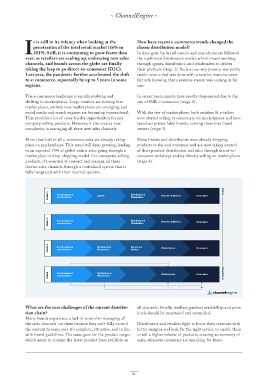
            I2019). Still, it is continuing to grow faster than   In days gone by, brand owners and manufacturers followed
            ever, as retailers are scaling up, embracing new sales   the traditional distribution model, which meant working
            channels, and brands across the globe are finally   through agents, distributors, and wholesalers to deliver
            taking the leap to go direct-to-consumer (D2C).   their products (stage 1). Such a one-way journey was pretty
            Last year, the pandemic further accelerated the shift   stable: once a deal was done with a retailer, manufacturers
            to e-commerce, reportedly by up to 5 years in some   felt safe knowing that a revenue stream was coming in for
            regions.                                          sure.

            The e-commerce landscape is rapidly evolving and   In recent years, agents have mostly disappeared due to the
            shifting to marketplaces. Large retailers are turning into   rise of B2B e-commerce (stage 2).
            marketplaces, entirely new marketplaces are emerging, and
            social media and search engines are becoming transactional.   With the rise of marketplaces, both retailers & e-tailers
            This provides a lot of cross-border opportunities for any   have started selling to consumers via marketplaces and have
            company selling products. However, it also creates new   launched private label brands, turning them into brand
            complexity in managing all these new sales channels.  owners (stage 3).

            More than half of all e-commerce sales are already taking   Many brands and distributors were already shipping
            place on marketplaces. This trend will keep growing, leading   products to the end consumer and are now taking control
            to an expected 75% of global online sales going through a   of their product distribution and sales through direct-to-
            marketplace or drop-shipping model. For companies selling   consumer webshops and by directly selling on marketplaces
            products, it’s essential to connect and manage all these   (stage 4).
            diverse sales channels through a centralized system that is
            fully integrated with their internal systems.


            What are the core challenges of the current distribu-  all channels. Finally, resellers, product availability, and price
            tion chain?                                       levels should be monitored and controlled.
            Many brands experience a lack of control in managing all
            the sales channels out there because they can’t fully control   Distributors and retailers fight to boost their revenues with
            the content to make sure it’s complete, attractive, and in line   better margins and look for the right service to enable them
            with brand guidelines. The same goes for the product range,   to sell a higher volume of products, creating an economy of
            which needs to contain the latest product lines available on   scale, wherever customers are searching for them.


                                                            21

