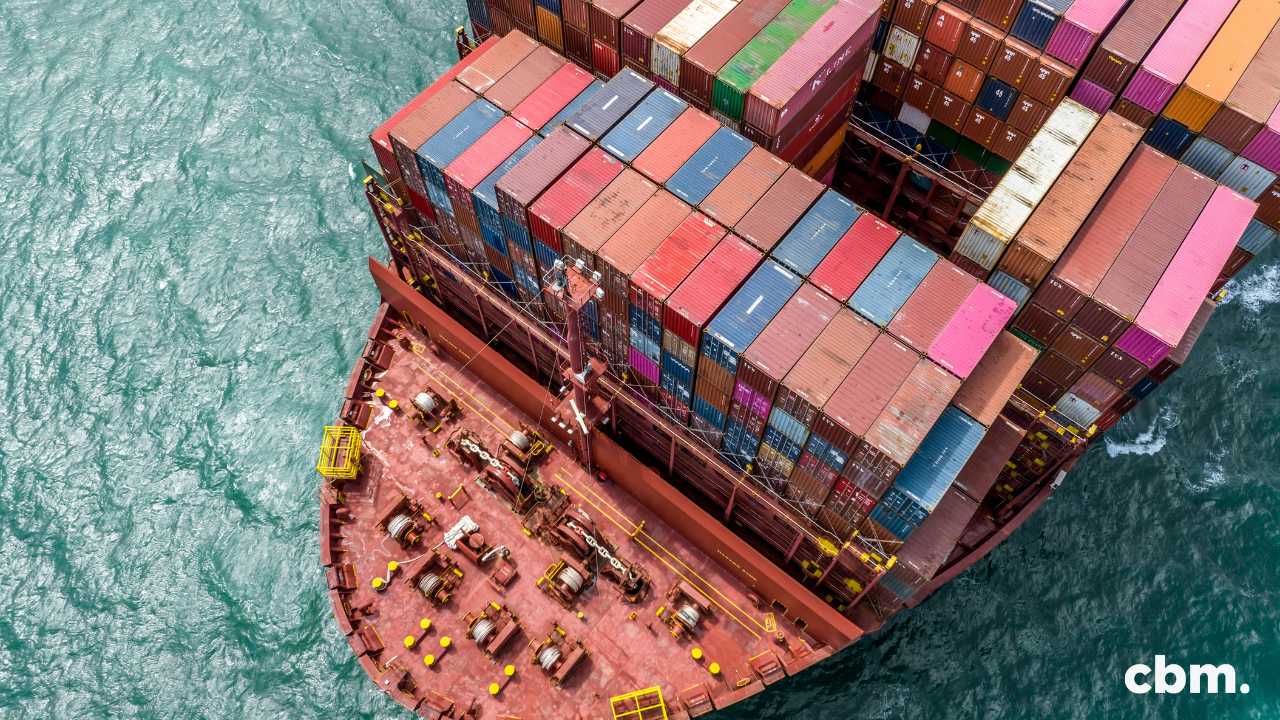
Global container shipping volumes hit a record 17.46 million twenty-foot equivalent units (TEUs) in August 2026, underscoring the resilience of international trade despite geopolitical instability, rising fuel costs, and mounting pressure on global supply chains. However, the latest figures from Container Trades Statistics (CTS) reveal a more challenging development for international retailers and cross-border businesses: global freight prices rose 44% from August 2025, reaching their highest level in more than two years.
According to the CTS report published on October 8, container volumes increased 3.7% year over year in August, surpassing the previous monthly record established in July. Cumulative global volumes for the first eight months of 2026 were 4.7% higher than during the corresponding period in 2025, confirming that international merchandise flows remain remarkably strong despite widespread uncertainty surrounding trade policies and maritime transportation.
Record container traffic and sharply higher shipping prices are creating a growing challenge for global e-commerce. While demand for international transportation remains resilient, businesses importing products from overseas manufacturing centers face increasing pressure on logistics budgets, inventory management and profitability. For retailers, marketplaces, and fulfillment providers, the latest data suggests the final quarter of 2026 could see sustained trade activity alongside elevated transportation costs.
The latest CTS figures establish August 2026 as the busiest month for containerized trade in the organization's database, with global liftings reaching 17.46 million TEUs. The result exceeds the previous record of approximately 17.3 million TEUs registered in July, continuing a period of exceptionally strong activity across international shipping networks.
The longer-term comparison illustrates the scale of the expansion. August volumes were 3.7% higher than August 2025, 7.2% higher than August 2024, and 12.9% higher than the corresponding month in 2023. These figures show that global container trade has continued to grow despite repeated disruptions to maritime routes, changes in international trade policy, and higher operating costs.
This performance is particularly notable given the difficult conditions that affected the shipping industry throughout 2026. Elevated fuel prices, security concerns in the Arabian Gulf, constraints affecting the Panama Canal and evolving tariff arrangements have complicated transportation planning for carriers and cargo owners. Nevertheless, global shipping volumes have continued to reach new highs, suggesting international supply chains are adapting to these challenges rather than broadly contracting.
However, record volumes do not necessarily indicate that the industry is entering a period of accelerating growth. CTS has warned that the pace of month-to-month expansion is beginning to moderate, raising questions about whether the current momentum can continue through the final months of the year.
While container volumes are setting records, freight pricing is also rising sharply. The CTS Global Price Index reached 117 points in August, up from 115 in July, its highest level since July 2024, when Red Sea disruptions exerted substantial pressure on maritime transportation.
The index has risen approximately 50% since January 2026 and stands 44% above its August 2025 level. The increase reflects a substantial deterioration in the cost environment for businesses relying on international container shipping, although actual freight rates vary considerably depending on the route, contract structure, shipping service and cargo characteristics.
Shipping prices have risen alongside disruptions affecting major international maritime corridors. Security concerns and operational difficulties can force shipping companies to adjust routes, extend transit times or allocate additional capacity to maintain service schedules. These adjustments reduce the effective availability of shipping capacity and increase operating expenses, even when the global fleet size remains unchanged.
Higher fuel costs create another layer of pressure. As energy prices rise, carriers face higher operating costs and may introduce or adjust fuel-related surcharges. These transportation costs can affect businesses across the supply chain, from manufacturers and wholesalers to retailers and direct-to-consumer brands.
For cross-border e-commerce companies, the problem extends beyond the headline freight rate. Higher maritime transportation costs contribute to the total landed cost of imported goods, potentially affecting retail pricing, promotional margins and decisions about where inventory should be stored.
The Far East remains the principal engine of expansion in global container shipping. According to CTS, exports originating in the region rose 8% in the first eight months of 2026 versus the same period in 2025, adding about 6.3 million TEUs.
Every major destination region recorded growth in containerized cargo originating from the Far East, with Sub-Saharan Africa and South and Central America leading in percentage terms. The figures reinforce Asia's central position within international manufacturing and distribution networks, even as businesses increasingly discuss diversifying their sourcing strategies.
For global e-commerce, the continued strength of Asian exports matters most. China and other Asian manufacturing economies remain important suppliers of consumer electronics, fashion, household products, accessories, and numerous other categories sold through international marketplaces and online retail channels.
The growth in containerized exports also highlights an important distinction between different forms of cross-border commerce. While changes to customs regulations and import duties can alter the economics of individual low-value parcels shipped directly to consumers, larger consolidated shipments continue playing a central role in international retail supply chains.
Many merchants import goods in bulk before distributing them through domestic warehouses, third-party logistics providers or marketplace fulfillment networks. Strong Asian export volumes reflect the continued importance of these inventory-based distribution models, although CTS does not separately identify the proportion of shipments attributable to e-commerce.
North American container imports have also shown signs of recovery following a difficult start to 2026. CTS reports that imports into the region rose 2% in the first eight months of the year versus the same period in 2025, reversing the negative year-to-date growth recorded earlier.
Stronger cargo flows from the Far East have supported the recovery. Trans-Pacific trade volumes increased 5% year-to-date, reflecting renewed activity along one of the world's most important shipping corridors.
The improvement is particularly notable given the uncertainty surrounding international tariffs and trade relations. Changes in import duties, customs procedures, and commercial restrictions can affect when businesses place orders, how much inventory they buy, and which countries they choose for manufacturing or distribution.
For retailers importing merchandise into the United States, shipping decisions are closely connected to inventory planning and consumer demand. Companies must balance the cost of maintaining stock against the risk of shortages, delayed deliveries or unexpected changes in import expenses.
However, the recovery should not be interpreted as evidence that every North American port or trade route is experiencing equivalent growth. Separate figures released by the National Retail Federation on October 8 showed that the major US container ports included in its Global Port Tracker handled approximately 2.3 million TEUs in August, down 0.7% year over year. The difference reflects the distinct geographical coverage and methodologies of the two datasets.
The broader picture is therefore one of recovering regional container trade, rather than uniformly accelerating imports across every port and shipping service.
One of the CTS report's most significant regional developments is Sub-Saharan Africa, where container imports rose 13% in the first eight months of 2026. This is the strongest percentage growth among the regions analyzed and highlights the growing importance of African markets in international merchandise flows.
Trade with multiple origin regions, particularly the Far East, supports the expansion. Growing container volumes suggest increasing commercial activity and stronger connections between African import markets and international manufacturing centers.
For cross-border retailers and logistics providers, the trend could have important long-term implications. As international trade volumes expand, demand may rise for freight forwarding, customs brokerage, warehousing, inland transportation, and distribution services that connect imported merchandise with domestic consumers and businesses.
However, rising container imports should not automatically be interpreted as equivalent growth in online retail sales. Container traffic includes industrial materials, machinery, intermediate goods, and other products that extend far beyond consumer e-commerce.
Nevertheless, the expansion demonstrates how international supply chains are evolving beyond their traditional concentration on North American and European destination markets. Businesses developing international distribution strategies may increasingly need to consider emerging trade corridors and the infrastructure required to support them.
Not every region is benefiting from the expansion in global container trade. The combined Indian Sub-Continent and Middle East region was the only major region in the CTS report to register declines in both imports and exports during the first eight months of 2026.
Imports fell 5% from the corresponding period in 2025, while exports fell 10%. The reduction in outbound volumes was just under one million TEUs, underscoring the scale of the disruption affecting regional trade.
The decline is particularly significant because the region occupies a strategically important position within international maritime transportation. Shipping routes connecting Asia, Europe and the Middle East are closely linked to major energy markets, manufacturing centers and international distribution networks.
Disruptions affecting these corridors can have consequences far beyond the countries directly involved. Changes in vessel routing, port accessibility and transportation schedules can influence capacity availability across other shipping lanes, contributing to congestion and higher operating costs.
This helps explain why global freight prices can rise even while overall shipping volumes remain strong. Maritime transportation operates as an interconnected network, so capacity restrictions in one region can affect commercial conditions elsewhere.
For international merchants, the consequences may include longer transit times, less predictable delivery schedules and additional costs associated with rerouting or alternative transportation arrangements.
Europe's export performance has also improved, although growth remains considerably weaker than in the Far East. According to CTS, European container exports returned to approximately flat year-to-date growth in August after declining in earlier months of 2026.
The stabilization reflects steady or improving cargo flows across most destination regions. Although zero growth may seem modest compared with expansion elsewhere, it still represents an improvement for European exporters operating in a challenging international trade environment.
Earlier CTS figures also indicated strong demand for imports from Europe. In its July report, the organization recorded 6.1% year-to-date growth in European imports, supported in part by about 1.5 million additional TEUs originating in the Far East.
The contrast between stronger imports and relatively subdued exports highlights the continuing importance of Asian manufacturing within European supply chains. It also illustrates the challenges European exporters face as they try to expand international sales amid rising transportation costs and changing trade conditions.
For European e-commerce businesses, these developments reinforce the importance of logistics planning. Companies importing products from Asia must account for higher freight costs, while those exporting to international customers must maintain competitive delivered prices.
This is especially relevant for businesses operating across multiple European marketplaces, where they can distribute inventory through regional fulfillment centers to reduce delivery times and improve service reliability.
The latest container shipping data has important implications for online retailers, particularly those relying on imported inventory. Although global container traffic doesn't directly measure e-commerce activity, maritime transportation remains a critical part of the supply chains supporting international online sales.
A large proportion of merchandise sold through marketplaces such as Amazon, Walmart, AliExpress and other retail platforms reaches its destination market through conventional freight networks before entering domestic fulfillment and parcel delivery systems. Rising ocean freight costs can therefore affect the economics of online retail long before someone places an order.
For businesses importing consumer goods, higher transportation expenses increase inventory acquisition costs. Depending on product margins and competitive conditions, merchants may absorb part of the increase, negotiate with suppliers, adjust selling prices or reduce promotional discounts.
The effect can be particularly significant for low-margin products, bulky merchandise and categories where transportation represents a substantial share of the final landed cost. Businesses selling high-value, lightweight products may experience a different cost impact, depending on their shipping arrangements and sourcing locations.
Freight volatility also complicates inventory planning. Retailers must determine how much stock to order, when shipments should depart and whether additional inventory should be held closer to customers to reduce exposure to unexpected transportation delays.
These decisions become especially important ahead of major shopping periods, when product availability and delivery reliability can directly influence conversion rates and customer satisfaction.
One potential consequence of sustained freight volatility is a greater emphasis on regional inventory management and fulfillment. Rather than relying on frequent international replenishment, retailers may consolidate larger shipments and distribute inventory through warehouses closer to their main consumer markets.
This approach can provide several advantages. Regional fulfillment facilities let merchants serve domestic and neighboring markets with shorter delivery times, reduce reliance on individual international shipments, and manage returns through local logistics networks.
However, regional warehousing introduces additional costs, including storage, inventory financing, labor, customs administration and operational management. The optimal model depends on sales volumes, product characteristics, demand predictability, and customers' geographic distribution.
Higher ocean freight prices do not automatically make local fulfillment cheaper for every merchant. Instead, it strengthens the need for detailed landed-cost calculations that consider transportation, inventory holding costs, customs requirements, and last-mile delivery expenses together.
For third-party logistics providers, this environment may create opportunities to offer more integrated services that combine international freight forwarding, customs clearance, inventory management, and domestic order fulfillment. As cross-border commerce becomes increasingly complex, merchants may place greater value on logistics partners that can manage the full movement of goods from manufacturing locations to final consumers.
The increase in freight prices also have different implications for businesses in the transportation industry. Ocean carriers can benefit directly from higher shipping rates, particularly when demand remains strong and capacity is constrained. Freight forwarders, however, operate under a different commercial model. These companies coordinate transportation and logistics services for customers, meaning that rising carrier rates do not necessarily translate into equivalent increases in profitability.
According to Reuters reporting published on October 6, European shipping and logistics companies are expected to benefit from resilient international trade and elevated freight prices, although the effects vary across different segments of the industry.
Carriers such as Hapag-Lloyd and Maersk are more directly exposed to ocean freight pricing, while logistics providers including DSV, DHL and Kuehne+Nagel may benefit from demand for additional services such as customs clearance, warehousing and complex supply-chain management. For e-commerce merchants, the distinction matters because ocean transportation is only one component of the overall logistics bill. Customs brokerage, port handling, inland transportation, storage and final-mile distribution can all contribute to the total cost of bringing products to market.
Businesses seeking to control logistics expenses therefore need to evaluate the complete supply chain rather than focusing exclusively on container freight rates.
The latest CTS figures arrive as retailers prepare for the final quarter of 2026, traditionally one of the most important periods for consumer spending and e-commerce activity. Black Friday, Cyber Monday, and the Christmas shopping season create significant demand for inventory, fulfillment capacity, and reliable transportation.
However, recent US port data suggests that the peak import season may already be moving past its busiest period. The National Retail Federation reported on October 8 that the extended US retail shipping peak appears to be winding down following sustained activity throughout the summer and early autumn.
According to the NRF, most holiday merchandise has already arrived, with remaining shipments increasingly focused on replenishment and preparation for early 2027. Its Global Port Tracker projects that US import volumes at the ports it covers will reach about 25.8 million TEUs for the full year, up 1.4% from 2025. These figures provide an important qualification to the global CTS data. Record worldwide shipping volumes do not necessarily mean retail imports will keep accelerating through the final quarter, particularly in markets where businesses have already brought forward seasonal inventory.
For merchants, the challenge is to manage existing stock efficiently while retaining sufficient flexibility to respond to unexpected changes in consumer demand. Higher freight prices make last-minute replenishment more expensive, while uncertain transit times can reduce the reliability of international restocking.
Retailers with accurate demand forecasts, diversified logistics arrangements and strategically positioned inventory may therefore be better equipped to navigate the current environment.
The central question facing the container shipping industry is whether strong volumes and high freight prices will persist. The CTS Global Price Index has risen sharply since the beginning of 2026, but future movements will depend on several interacting factors, including geopolitical developments, fuel prices, shipping capacity and global merchandise demand.
Fewer maritime disruptions could eventually return effective capacity to the market, potentially easing freight rates. Conversely, continued route restrictions, higher fuel costs, or renewed congestion could sustain pricing pressure even if container volume growth begins to moderate.
The pace of demand growth will also be important. CTS has already identified signs of slowing month-to-month momentum, suggesting that the market may be approaching a period of more moderate expansion after consecutive record months.
For retailers and importers, the prudent approach is not to assume freight prices will keep rising indefinitely or quickly return to earlier levels. Instead, businesses need to prepare for continued uncertainty and assess how different shipping-cost scenarios could affect their margins, inventory decisions and international expansion plans.
Recent years have shown that global supply chains can remain operational during major disruption, but resilience often comes at a considerable financial cost.
The latest Container Trades Statistics report presents a striking picture of the international shipping industry. Global container volumes reached a record 17.46 million TEUs in August 2026, while the Global Price Index climbed to 117 points, approximately 50% above its January level and 44% higher than a year earlier.
The figures show that international merchandise trade continues to expand despite geopolitical tensions, shifting tariff policies, and operational constraints affecting major shipping routes. Strong exports from the Far East, recovering North American imports and rapid growth in Sub-Saharan Africa are helping sustain global container traffic, even as disruptions in the Indian Subcontinent and Middle East weigh on regional performance.
For cross-border e-commerce, the implications extend beyond the shipping industry. Higher freight prices affect inventory acquisition costs, product pricing, warehouse strategies, and international merchants' competitiveness. They also reinforce the importance of efficient fulfillment networks and the ability to adapt quickly to changing transportation conditions.
The broader message is that global trade is not retreating amid disruption. Instead, businesses and logistics providers are finding ways to keep goods moving through an increasingly complicated international environment. The challenge for the remainder of 2026 and beyond will be determining how much that resilience costs, and which companies are best positioned to absorb or manage the resulting pressures.




By continuing to use the site, you agree to the use of cookies. more information
The cookie settings on this website are set to "allow cookies" to give you the best browsing experience possible. If you continue to use this website without changing your cookie settings or you click "Accept" below then you are consenting to this.