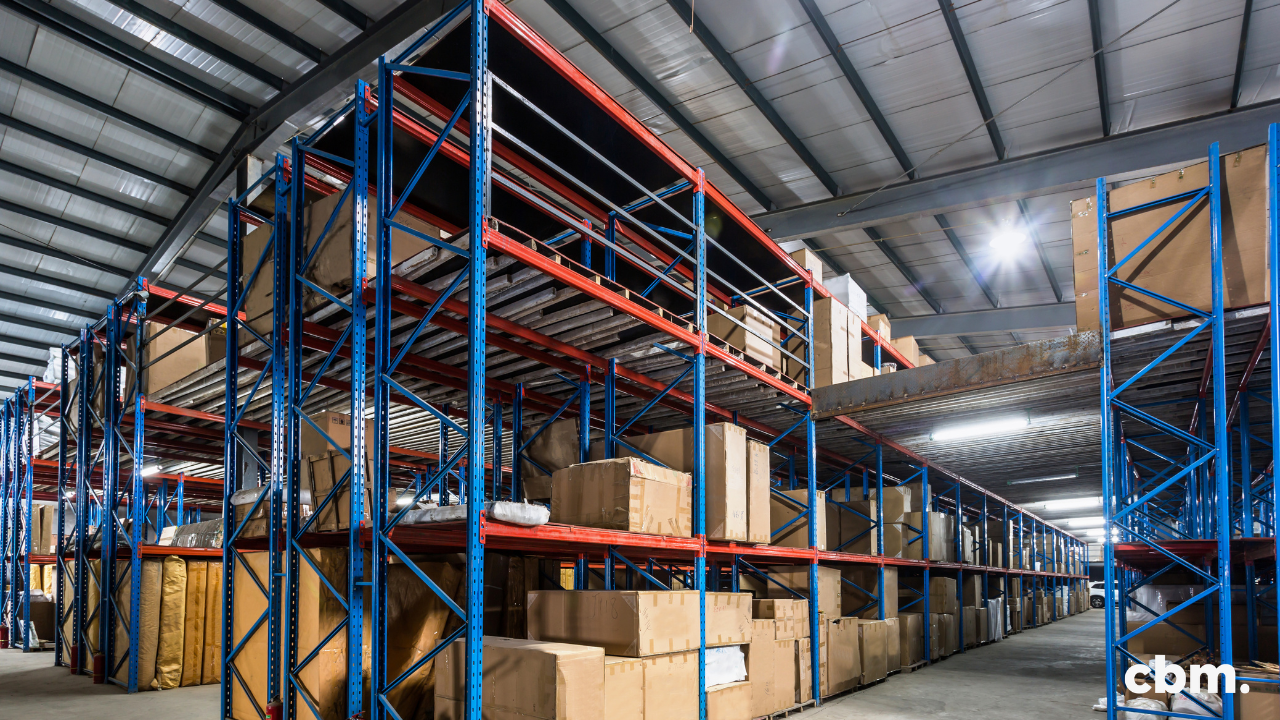
JD Logistics is accelerating the international expansion of its fulfillment network, positioning overseas warehousing at the center of a global logistics model that combines cross-border transportation, inventory management, fulfillment, last-mile delivery and returns. The Chinese logistics group is expanding through its international brands JoyLogistics and JoyExpress as it seeks to reproduce more of its domestic end-to-end supply chain capabilities across Europe, North America, the Middle East and Asia-Pacific.
As of June 30, 2026, JD Logistics operated more than 200 overseas warehouses across 26 countries and regions, with combined gross floor area exceeding 2 million square meters. The network represents a substantial expansion from the more than 100 bonded, direct-mail and overseas warehouses, covering over 1 million square meters, that the company reported at the end of 2024.
The expansion comes at an important moment for global e-commerce. Regulatory changes, particularly in Europe, are increasing pressure on the traditional model of shipping millions of low-value parcels individually from China to consumers. JD Logistics' warehouse-centered approach offers an alternative: move inventory into destination markets in advance and fulfill orders locally.
JoyLogistics is JD Logistics' international supply chain and third-party logistics brand. Its services cover cross-border transportation, bonded and overseas warehousing, inventory management, order fulfillment, last-mile delivery, reverse logistics, large-item delivery and installation, and supply chain technology.
Rather than treating international transportation, warehousing and final-mile delivery as separate services, the company is attempting to connect them into an integrated logistics network. Inventory can be transported internationally, positioned in an overseas warehouse and subsequently distributed according to local demand.
The strategy is designed to serve both Chinese companies expanding internationally and local companies looking for integrated supply chain services. During the first half of 2026, JD Logistics said it expanded relationships with Chinese consumer electronics companies in the United States, extended European partnerships with home appliance and drone brands into additional countries, and increased warehouse capacity for customers in the Middle East.
JD Logistics is also exporting its warehouse technology. The company said it has begun providing its internally developed smart warehouse automation technologies to overseas customers, expanding its international business beyond the physical movement and storage of goods.
JD Logistics' international warehouse footprint now extends across major e-commerce and logistics markets including the United States, United Kingdom, France, Germany, the Netherlands, Poland, Australia, United Arab Emirates, Saudi Arabia, Japan and Malaysia.
The scale of the expansion becomes clearer when compared with the company's position only a few years ago. JD Logistics has historically built its competitive advantage around an extensive self-operated logistics infrastructure in China. It is now attempting to reproduce elements of that model internationally rather than operating primarily as a China-based cross-border carrier.
Warehousing forms the foundation of the strategy. From these facilities, JD Logistics can provide localized inventory management and fulfillment while connecting international freight with domestic distribution networks.
This creates a different model from traditional direct-mail cross-border e-commerce. Instead of waiting for a European consumer to order a product before shipping it individually from China, inventory can be imported in larger quantities and stored closer to anticipated demand.
Europe is becoming particularly important to the company's international strategy. JD Logistics management described Europe as a core market during its latest results discussions and said the company is continuing to increase the density of its warehouse and delivery network across the continent.
The expansion is closely connected with JD.com's renewed European retail ambitions through Joybuy. JD launched JoyExpress in Europe in early 2026 to provide dedicated last-mile delivery services initially supporting Joybuy.
The network began operating in core areas of the UK, Germany, the Netherlands and France and has subsequently expanded its European coverage. JD has been developing a network of more than 60 warehouses and depots to support the service, using trucks, vans and electric bicycles for final-mile operations.
The objective is ambitious: same-day and next-day delivery in major European cities, supported by locally positioned inventory.
JD Logistics has also introduced services normally associated with its mature Chinese logistics network, including doorstep delivery, reverse logistics and integrated delivery and installation for large products such as home appliances.
The timing of the expansion is particularly significant for the cross-border e-commerce industry.
Europe is tightening its treatment of low-value e-commerce imports. Since July 2026, the EU has applied a temporary €3 customs duty to qualifying low-value imported goods following the removal of the previous customs duty exemption for consignments below €150.
The consequences are already becoming visible in trade and logistics data. Chinese low-value and e-commerce exports to the EU fell sharply during July and August, placing pressure on a direct-to-consumer logistics model that helped Chinese marketplaces expand rapidly across Europe.
This does not necessarily mean European consumers are abandoning Chinese products. Instead, the structure through which those products reach consumers may be changing.
For Chinese retailers and manufacturers, moving merchandise into European warehouses before it is sold can reduce dependence on millions of individual cross-border shipments. Goods can enter Europe in consolidated commercial loads, be positioned closer to customers and subsequently move through domestic or intra-European fulfillment networks.
JD Logistics appears particularly well positioned for such a transition because warehousing, rather than parcel forwarding alone, sits at the center of its international strategy.
JoyExpress adds another important component to that model.
While JoyLogistics focuses primarily on integrated supply chain and 3PL services, JoyExpress operates as JD Logistics' self-operated express and last-mile delivery brand. This allows JD to connect international transportation and warehouses with the final journey to the consumer.
In Europe, JoyExpress initially launched alongside Joybuy in the UK, Germany, the Netherlands and France. The network is designed to provide same-day and next-day services in major cities and includes dedicated delivery teams and branded vehicles.
JD Logistics has subsequently continued to densify its European network and expand geographical coverage. Company management said during its 2026 results that it had strengthened service coverage across markets including the UK, Germany, Belgium, the Netherlands and Luxembourg.
This vertical integration is important. Rather than handing inventory to an external parcel carrier immediately after it leaves the warehouse, JD can potentially control a larger proportion of the customer journey.
The approach resembles the infrastructure strategy JD has developed over many years in China: combine inventory visibility, warehousing, transportation and delivery within a highly integrated technology platform.
JD Logistics is simultaneously expanding control over international transportation.
As of June 30, 2026, JD Airlines operated 13 dedicated freighter aircraft. The company is developing what it calls its "11668" global air network plan, which includes a global aviation hub in Wuhu, a main operating base in Nantong, six regional air hubs and 68 freighter stations.
Europe and North America are among the principal international corridors targeted by the network.
JoyLogistics also combines air freight with ocean shipping, road transportation and rail services, including China-Europe rail connections. The company has additionally secured capacity through partnerships with six major international airlines.
This multimodal approach gives JD more flexibility over how inventory reaches its overseas fulfillment centers. High-priority merchandise can move by air, while larger inventory replenishment flows can use ocean, rail or road transportation depending on cost, demand and delivery requirements.
JD's international ambitions extend well beyond Europe.
In the Middle East, the company has been expanding logistics infrastructure across the UAE and Saudi Arabia. JD Logistics operates multiple warehouses in the UAE, including a facility exceeding 10,000 square meters in Dubai's Jebel Ali Free Zone.
The group is also developing a 70,000-square-meter smart logistics hub in Abu Dhabi through a partnership between JINGDONG Property and Abu Dhabi Airports Free Zone.
Saudi Arabia has become another important market. JoyExpress launched there in 2025 with a self-operated B2C delivery network offering services including same-day and next-day delivery, cash on delivery, scheduled delivery, reverse pickups, customs clearance and cross-border transportation.
JD is therefore developing regional ecosystems rather than isolated warehouses. Warehouses, sorting facilities, transportation infrastructure and delivery stations can collectively support both domestic commerce and international sellers entering those markets.
Another important element of the strategy is that JD Logistics is not building this infrastructure exclusively for JD.com's own retail operations.
The logistics division has increasingly positioned itself as an independent 3PL and supply chain provider serving external businesses. In the first half of 2026, JD Logistics generated RMB 124.7 billion in total revenue, an increase of 26.5% year-on-year. Revenue from external customers increased even faster, rising 29.3% to RMB 85.4 billion.
External customers therefore accounted for approximately 68% of total revenue during the period.
That changes the significance of the international expansion. The warehouses supporting Joybuy can simultaneously become infrastructure through which manufacturers, retailers and other e-commerce companies access JD's fulfillment capabilities.
Greater warehouse density can subsequently improve delivery economics, which attracts additional customers and volumes. Those additional volumes can in turn improve utilization of warehouses, transportation and delivery networks.
It is a logistics model that depends heavily on scale.
JD Logistics' expansion also illustrates a broader transformation taking place within Chinese cross-border commerce.
For much of the past decade, the dominant international e-commerce model focused on connecting China's enormous manufacturing ecosystem directly with consumers overseas. Cheap air transport, simplified customs treatment for low-value goods and increasingly sophisticated digital marketplaces made it possible to sell inexpensive individual products across thousands of kilometers.
That environment is changing.
Governments are tightening customs rules, consumers increasingly expect domestic-level delivery speeds, and marketplaces are seeking greater control over fulfillment and returns. The result is increasing pressure to position inventory closer to the consumer.
Under this model, international e-commerce begins to resemble domestic commerce. Products cross borders in bulk before the customer places an order. Warehouses become more important, while final-mile delivery and reverse logistics become competitive differentiators.
JD Logistics is effectively building infrastructure for that transition.
For the European logistics industry, JD's expansion introduces another powerful competitor into an already rapidly changing market.
The company is not entering Europe simply as a parcel carrier. Its model combines international freight, warehouses, automation, fulfillment, returns and increasingly its own final-mile network.
That puts JD Logistics into competition across several layers of the supply chain simultaneously, including with traditional freight forwarders, contract logistics providers, fulfillment specialists and parcel delivery companies.
At the same time, the shift could create new partnerships. A network spanning more than 200 overseas warehouses still depends on ports, airports, line-haul operators, customs specialists and local transportation infrastructure. JD's international growth could therefore generate both competitive pressure and new volumes for existing European logistics providers.
JD Logistics' international expansion suggests that the next stage of Chinese e-commerce globalization may look very different from the previous one.
Instead of relying primarily on individual parcels moving directly from Chinese warehouses to overseas consumers, companies are increasingly building inventory, fulfillment and delivery infrastructure inside their destination markets.
JD already has more than 200 overseas warehouses across 26 countries and regions, over 2 million square meters of overseas warehouse space, a growing European last-mile operation and its own international freighter fleet.
That combination gives the company the infrastructure to participate in virtually every stage of an international e-commerce transaction: moving goods out of China, storing them in destination markets, processing orders, delivering purchases and handling returns.
As customs rules become stricter and consumer expectations for faster delivery continue to rise, that warehouse-centered model could become increasingly important.
The future of Chinese cross-border e-commerce may therefore depend less on how quickly individual parcels can travel from China to Europe — and increasingly on how efficiently Chinese companies can operate fulfillment networks inside Europe itself.



By continuing to use the site, you agree to the use of cookies. more information
The cookie settings on this website are set to "allow cookies" to give you the best browsing experience possible. If you continue to use this website without changing your cookie settings or you click "Accept" below then you are consenting to this.