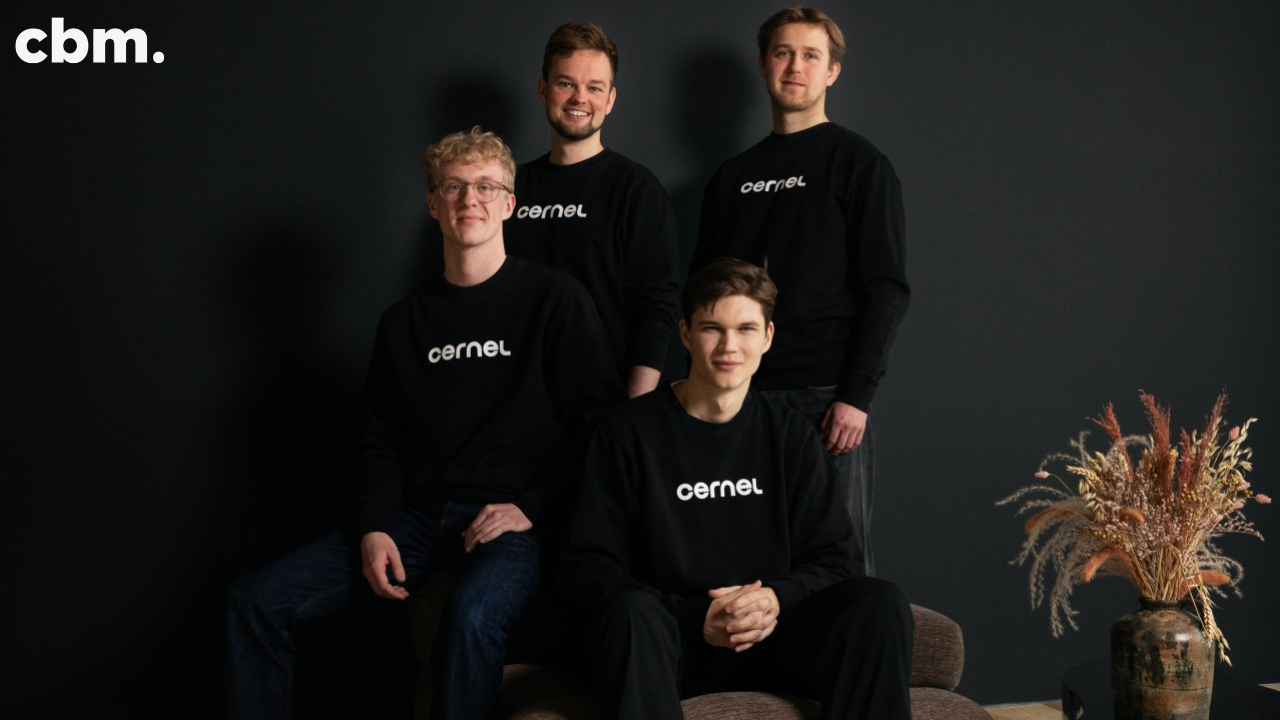
A new Danish startup is positioning itself at the intersection of artificial intelligence and digital commerce. Cernel, an AI company based in Aarhus, Denmark, has raised €4 million in seed funding to build what it calls the foundational infrastructure for “agentic commerce.” The round was reported on February 23–24, 2026, marking one of the most notable early-stage AI commerce investments in Europe this year.
The funding highlights growing investor interest in technologies that prepare online retailers for a future where AI agents — rather than humans — increasingly mediate product discovery and purchasing decisions.
Cernel secured €4 million in seed funding (approximately $4.7 million) in a round led by Seed Capital, a prominent Nordic venture capital firm. The investment was completed in just four weeks, a pace that reflects strong investor confidence in the startup’s technology and market potential.
The round also attracted several experienced entrepreneurs who have previously built and scaled global technology companies.
The capital will be used to:
According to CEO and co-founder Andreas Busch, demand for the company’s technology has been strong because many e-commerce businesses are struggling with the complexity of managing large product catalogs and fragmented data sources.
Founded in 2023 in Aarhus, Cernel develops an AI-driven platform that manages and structures e-commerce product data.
The company was created by 3 founders:
Their goal is to solve a long-standing operational problem in online retail: the manual handling of product information.
Many e-commerce companies still rely on spreadsheets, supplier feeds, and disconnected systems to manage product attributes, descriptions, and media. This leads to:
Cernel’s platform aims to automate and optimize this entire process using artificial intelligence.
Product data management has become one of the biggest hidden challenges in modern e-commerce.
Retailers often receive product information from multiple suppliers in inconsistent formats. Teams then spend significant time manually cleaning, enriching, and distributing that information across:
This process creates operational friction and limits the ability to scale product catalogs efficiently.
Cernel addresses this challenge with an AI-native product data pipeline that:
The result is a fully automated product data infrastructure designed for modern digital commerce.
Cernel’s long-term vision revolves around a concept known as agentic commerce.
In this emerging model, AI systems act as intelligent agents capable of performing tasks such as:
Rather than consumers manually browsing websites, AI assistants could increasingly manage shopping decisions on their behalf.
For this future to work, product information must be structured in a way that machines can interpret and process.
Cernel positions its platform as the “reasoning layer” for commerce data, transforming messy supplier information into structured, machine-readable assets that AI agents can understand and act upon.
This infrastructure could become critical as AI-powered shopping ecosystems expand.
Despite being a young company, Cernel has already begun working with established e-commerce brands.
Early customers reportedly include companies in sectors such as:
Brands like Hummel, Vero Moda, and Matas have already used the platform to streamline their product data operations.
This early adoption demonstrates the widespread demand for solutions that automate product catalog management.
The lead investor in the round, Seed Capital, believes Cernel is building foundational infrastructure for the future of retail.
According to the venture firm, the startup is not simply applying AI to an existing problem but is redefining how commerce systems operate.
Seed Capital has previously backed major Nordic success stories, including:
The firm sees Cernel as a potential new generation of AI-first infrastructure companies capable of shaping global digital commerce.
As e-commerce evolves, structured product data is becoming a competitive advantage.
Retail platforms, search engines, recommendation systems, and AI assistants all rely on clean, structured, and enriched product information to function effectively.
Companies that fail to manage product data properly face several disadvantages:
Solutions like Cernel aim to solve these challenges by turning messy retail data into AI-ready commerce assets.
Cernel’s €4 million funding round highlights a broader trend in the e-commerce technology landscape: the rise of AI infrastructure for retail operations.
Rather than focusing solely on storefronts or marketplaces, the next generation of commerce startups is building tools that power the data layer behind online retail.
If the concept of agentic commerce becomes reality, platforms like Cernel could play a central role in enabling AI systems to interact with product catalogs, evaluate options, and execute transactions autonomously.
For now, the Aarhus-based startup is focused on expanding internationally and continuing to build the infrastructure it believes will power the next decade of digital commerce.



By continuing to use the site, you agree to the use of cookies. more information
The cookie settings on this website are set to "allow cookies" to give you the best browsing experience possible. If you continue to use this website without changing your cookie settings or you click "Accept" below then you are consenting to this.