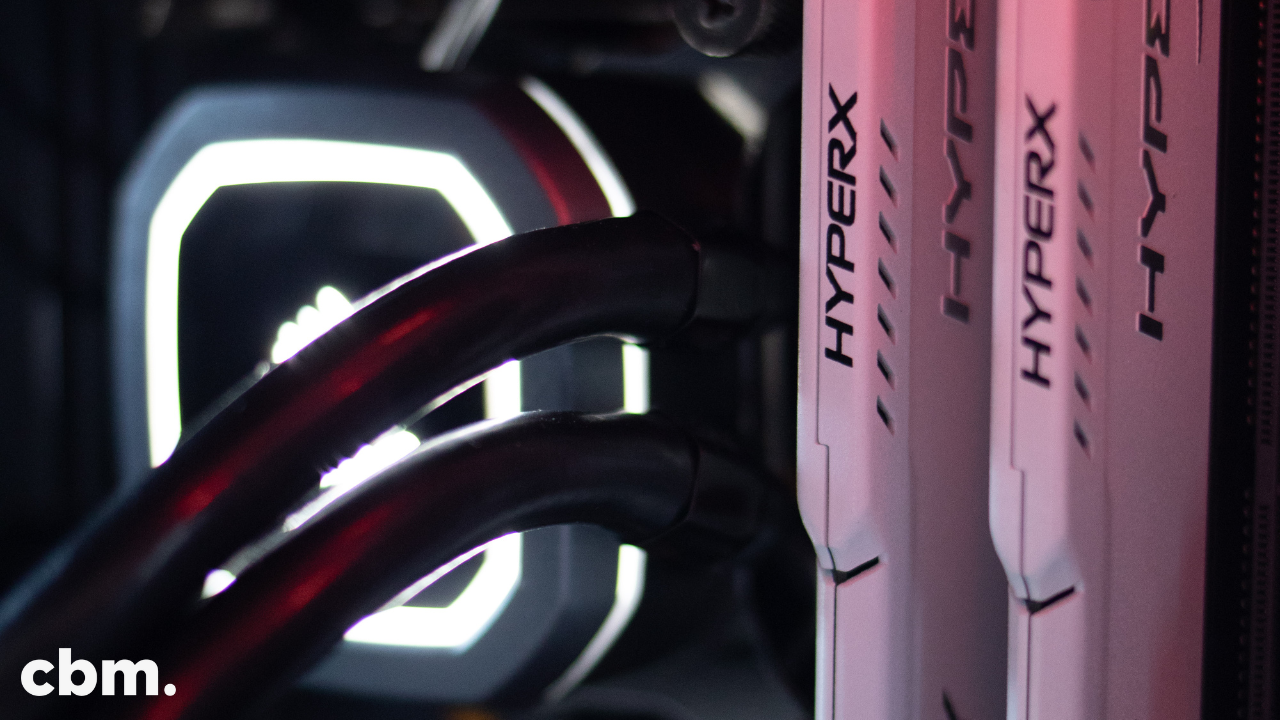
The global memory market entered a new phase in 2025 as DRAM pricing pressure accelerated and availability tightened. Unlike many past cycles, the driver is not only short-term demand spikes, but also an allocation shift toward AI-oriented memory and high-capacity server DRAM. This rebalancing is reshaping supply for mainstream DRAM used in PCs, smartphones, and countless embedded systems.
For 2026, multiple market signals point to continued volatility. Even where prices stabilize, they may do so at a higher level than buyers were accustomed to in the previous down cycle.
DRAM is one of the most widely used semiconductor components worldwide. It sits inside consumer devices like smartphones and laptops, but it also powers servers, cloud platforms, network equipment, industrial systems, and the compute layer that runs modern commerce.
When DRAM becomes more expensive, the impact spreads because memory is a direct input into:
Even small DRAM changes can alter the economics of entry-level phones and mainstream PCs, where pricing is tightly constrained.
AI workloads and data-heavy applications are memory-intensive. Higher DRAM prices raise server build costs and can influence cloud pricing and expansion decisions.
DRAM touches everything from retail POS systems to warehouse scanners and industrial controllers, making it an economy-wide cost lever.
Several forces are converging and reinforcing each other.
AI servers use far more memory per system than most consumer devices, and the buildout pace has been extraordinary. Market analysis has highlighted that this demand shift is structural, not a one-off spike.
A central dynamic described by IDC is that supply is being reassigned toward AI-driven memory segments, making the mainstream DRAM market feel tighter even when total memory output grows.
IDC expects 2026 DRAM supply growth to be below historical norms, which keeps the market sensitive to demand surprises and inventory behavior.
When OEMs anticipate price increases or shortages, they buy ahead, which can temporarily worsen tightness. IDC notes inventory building ahead of projected price increases in late 2025.
A practical way to forecast DRAM-driven impact is to translate memory tightness into outcomes buyers feel: device prices, configuration changes, and cloud infrastructure costs.
TrendForce expects the price surge to persist into early 2026 and for PC DRAM-related price fluctuations to become more pronounced by the second quarter of 2026.
IDC outlines scenario ranges that reflect how component pressure can translate into average selling price inflation:
Moderate scenario: 3% to 5% increase
Pessimistic scenario: 6% to 8% increase
Moderate scenario: 4% to 6% increase
Pessimistic scenario: 6% to 8% increase
These ranges are significant for price-sensitive markets, where OEMs have less margin room and may respond by downgrading specifications rather than raising prices aggressively.
Some reporting citing Counterpoint Research suggests DRAM prices rose sharply in 2025 and could keep rising into early 2026, with an expectation that specific enterprise DDR5 module prices could be roughly double by the end of 2026 compared with early 2025.
The impact is not evenly distributed. Memory intensity and margin structure determine who feels pain first.
Memory-heavy AI workloads and server expansion programs directly collide with constrained DRAM capacity. Higher server build costs can translate into higher compute economics and slower expansion at the margin.
E-commerce businesses depend on a technology stack that is memory-dependent at every layer:
Warehouse devices, POS endpoints, laptops, servers, and networking systems become more expensive to procure and replace.
If providers face higher infrastructure costs, promotional cloud pricing can tighten and unit economics for personalization, search, and AI automation can worsen.
Organizations that postpone upgrades may face performance and security trade-offs as workloads outgrow older equipment.
These sectors are exposed because mainstream devices are volume businesses with tight margins, and memory is a significant part of the bill of materials.
Gaming PCs and performance workstations compete for higher memory configurations and are sensitive to component inflation and supply disruptions.
As vehicles and industrial systems become software-defined and sensor-heavy, memory footprints grow. A tight memory market can raise costs and complicate lead times across electronics programs.
When DRAM costs rise, manufacturers often respond in ways that are not obvious to consumers.
TrendForce points to specification cuts and delayed upgrades as a key OEM response when memory pricing rises.
This matters because it creates a scenario in which shoppers pay similar prices for less RAM or must pay more to maintain prior-generation performance levels.
Higher memory costs can widen the gap between entry-level and mid-range products. Entry tiers may stagnate or regress in specs, while premium tiers stay attractive but become more expensive.
Higher DRAM costs can influence e-commerce outcomes through four primary channels.
As smartphones and PCs rise in price, unit shipments can weaken and replacement cycles can extend, especially in markets with lower disposable income. IDC highlights the risk of longer replacement cycles under sustained pressure.
E-commerce growth is increasingly tied to data and AI. Memory-driven cost increases can raise the cost to run search, recommendations, inventory optimization, and customer support automation.
Volatile input costs increase the likelihood that planned promotions miss margin targets or face stock constraints.
When technology inputs inflate, shipping, pricing, and availability variance can widen across regions, complicating international assortment planning.
DRAM is a foundational input to digital productivity. When memory is expensive, it functions like friction across multiple growth engines.
Higher device prices raise the barrier to access for education, work, and commerce in price-sensitive regions.
SMEs and public sector organizations may delay refresh cycles, slowing adoption of more efficient hardware and software stacks.
If DRAM and memory-related components remain costly, compute-intensive innovation becomes harder for smaller firms, reinforcing scale advantages for hyperscalers that can secure supply.
Several developments can push outcomes toward the pessimistic end of the range.
If AI capacity expansion continues to accelerate, memory tightness can persist even as broader consumer demand slows.
Memory markets are susceptible to disruptions. Any unexpected constraint can amplify price volatility.
If OEMs and channel partners pre-buy aggressively, spot prices can spike even when long-term contracts remain stable.
Locking in supply, qualifying alternates, and reducing dependence on single device SKUs can minimize exposure.
Reducing overprovisioned instances, improving workload scheduling, and optimizing data lifecycle management can lower memory consumption per unit of value delivered.
If you sell electronics, spec transparency reduces returns and improves customer satisfaction during periods of configuration volatility.
The combination of AI-driven memory demand, capacity redirection toward higher-margin memory, and supply growth below historical norms is tightening mainstream DRAM supply and increasing pricing pressure.
IDC scenarios indicate smartphones could see 3% to 5% (moderate) or 6% to 8% (pessimistic) ASP increases, while PCs could see 4% to 6% (mild) or 6% to 8% (pessimistic) increases. Some reports suggest specific enterprise DDR5 module pricing could be roughly double by the end of 2026 compared to early 2025.
It raises device and IT infrastructure costs, increases cloud run-rate risk, and can reduce consumer demand for electronics while making promotion planning and cross-border assortment less predictable.



By continuing to use the site, you agree to the use of cookies. more information
The cookie settings on this website are set to "allow cookies" to give you the best browsing experience possible. If you continue to use this website without changing your cookie settings or you click "Accept" below then you are consenting to this.