Global B2C e-commerce grew significantly in 2015. Compared to the preceding year, global Internet sales increased by 19.9%, resulting in an online turnover of $2.3 trillion. This positive trend is expected to continue: for the year 2016 a growth rate of 17.5% is forecast, which would result in a global B2C e-commerce turnover of around $2.7 trillion. “To put these huge figures into the right perspective, they are roughly the same as the Gross Domestic Product of a country like France or the United Kingdom”, says Jorij Abraham, CEO of the Ecommerce Foundation.
Download: Infographic_Global_Cross-border
The infographic shows that the key global e-commerce markets include the usual suspects; China and the United States are still clearly leading the way regarding B2C e-commerce turnover. However, there are other interesting e-commerce markets that might be interesting for companies that want to expand their business to other countries.
Fastest-growing e-commerce market in the world
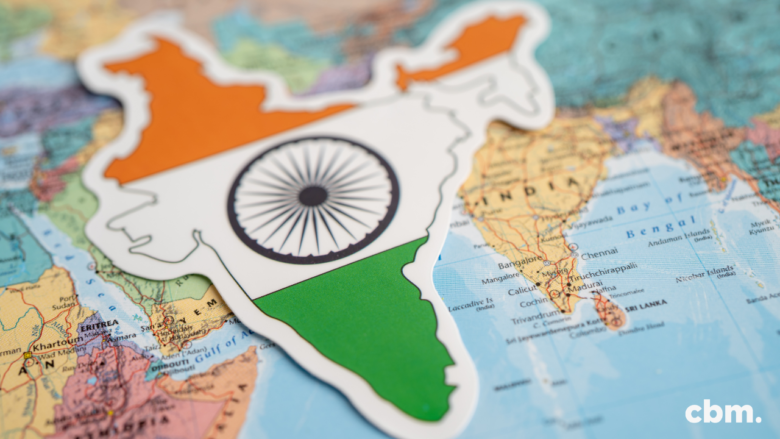
India is one of the fastest-growing e-commerce markets in Asia-Pacific, with its online sales rising to $25.5bn in 2015, a spectacular 129% increase. Even though this turnover remains considerably lower than the e-commerce revenue of the top players mentioned above, it did earn India a spot in the global top 10.
There is still a lot of room for improvement of e-commerce in India. For example, at 27%, its Internet penetration rate is far below the world’s average of 45%. Also, with only 82.3 million (8.7%) of the 942.6 million Indian consumers of 15 years and older shopping online, there is a lot to gain here.
The share of e-commerce in India’s Gross Domestic Product (eGDP), which is a good indication of the popularity of e-commerce in a country, amounted to 1.2% in 2015. This may not be a high percentage, as the global average was 3.1% that year, but it does represent a growth of 500% compared to 2012. “E-commerce is becoming increasingly popular in India”, confirms Abraham. This is also reflected in the online sales, which are expected to grow by 75.8%. As a result, India will maintain its position of the fastest-growing e-commerce market in the world.”
Europe’s youngest population
Turkey is one of the emerging e-commerce countries in Southern Europe and is making great strides in developing and improving its online market. It is among the top European countries with regard to the B2C e-commerce growth rate. The Turkish B2C e-commerce turnover grew by 34.9% in 2015, making it the second-fastest growing online sales market in Europe, only just behind Ukraine (+35.0%).
The main reason for this rise in popularity of B2C e-commerce is Turkey’s tech-savvy population. Almost 85% of the Turkish population is below the age of 55, meaning that Turkey has Europe’s youngest population. In general, younger people are more abreast of technological and digital innovation, making them more interested in shopping online, for example.
Still, Turkey has the lowest Internet penetration rate in Europe. With 54% of the Turkish consumers of 15 years and older being connected, this rate is well below the European average of 75%. This percentage has grown rapidly over the last few years and will most likely keep on doing so. All in all, the Turkish B2C e-commerce turnover is also expected to continue its strong growth in 2016, as a rise of 37.3% is forecast.
Cross-border e-commerce is king in Israel
Israel might not seem like a very impressive e-commerce market, but appearances can be deceptive. An online turnover growing by 8.9% to $4.9bn in 2015 is not hugely spectacular, but Israel is one of the most technically advanced societies in the world. It has a thriving technology sector and a special focus on financial technology (fintech).
Israeli consumers are very keen on shopping online, and cross-border online shopping in particular. Around 95% of the Israeli online population (through computers, laptops or smart devices, at home or at work) made at least one online purchase in 2015. Many of these purchases took place on foreign online shops; with the US, China and the UK being the most popular destinations. Abraham says “The main reasons for this are that only one quarter of domestic companies have an online shop and that their prices are significantly higher than in other countries, due to higher VAT rates and current monopolies.”
Would you like to learn more about global e-commerce? Or are you interested in the state of e-commerce in the twelve key e-commerce markets in the world? Please go to www.ecommercewiki.org and learn more from our B2C E-commerce Reports.



By continuing to use the site, you agree to the use of cookies. more information
The cookie settings on this website are set to "allow cookies" to give you the best browsing experience possible. If you continue to use this website without changing your cookie settings or you click "Accept" below then you are consenting to this.