The European entrepreneur differentiates from other entrepreneurs globally in many ways: for once they have to battle in a remarkably competitive market. Europe is filled to the brim with high-quality brands, companies that have centuries of history, and even some of the world's top-notch technological and industrial brands.
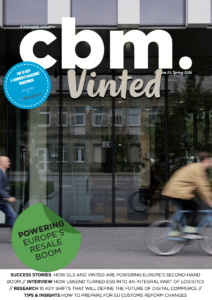
Do you want to know more about international commerce, e-commerce, and also get all the tips and news that might give your company an edge? Subscribe to Cross-Border Magazine and get your digital copy now for free!
This is by no means an easy market. Especially for those who are just starting from scratch.
So, what can we do to be successful as European entrepreneurs? Let’s find it out today!
First things first, to be an entrepreneur in Europe you need two fundamental things: comply with all the current legislation that will allow you to enact your commercial activity in whichever country of the Union you are based, and secondly, have the nerves and the steel to pursue a total commitment towards acquiring or developing the following five traits.
Otherwise, your story as an entrepreneur will be short-lived and probably doomed to fail.
Depending on the country that you choose, the type of business, and the legal formula you want to use - either be a company, a limited society, or a corporation just to mention a few - you will face different kinds of requisites to be able to legally operate inside the EU.
And please, do pay attention to this first step. Becoming an entrepreneur in the EU is something that you can not do outside of the law. This is not like it happens in Latin America or India - just to put two examples - where you can start rolling out with your business and eventually find your way around all the legal paperwork.
Laws concerning commercial activities in the EU are enforced with keen zeal by each member state government and often carry with them heavy sanctions that can fatally wound any fledgling business.
If you want to know more about what specific legal requirements you need to comply with, we highly recommend that you check your desired business activity requirements on the corresponding website of the national authority for that activity in the country in which you want to operate.
And you can also use this official link to have a general idea of the requisites inside the EU.
With the legal part of our chests, we can start checking out some core traits that will give you the cutting edge if you plan to become a European Entrepreneur.
And the first one is to develop business flexibility. This is fundamental in Europe.
Business flexibility is the ability of a company to adapt to changing circumstances and thus remain a profitable enterprise. A business that is able to anticipate changes in consumer preferences and alter production to meet those new expectations has a much better possibility of continuing over the long term.
For this reason, including measurement of flexibility within the company operation is often considered key to assessing the strength of the business, and thus arriving at an accurate understanding of the potential for business endurance.
This becomes acutely important in highly competitive markets, like the European one, where a new product or a product innovation for an already established product, can shift the entire “balance of power” for that particular activity, plunging into the deeps of the ocean those companies incapable of adapting themselves to the new competitor.
Focusing on your goals, and pursuing them relentlessly is also a fundamental trait for the European entrepreneur. The EU market is highly competitive but, it is also considered stable from an inflation and economic perspective.
This in turn allows for long-term plans to be implemented with a certain degree of accuracy, as long as “ceteris paribus” applies, meaning, as long as no massive innovation or breakthrough comes to light in your line business.
For the European entrepreneur, success is usually achieved via discipline. It's a marathon, not a sprint.
So try to keep your long-term plans on the horizon, be focused on the small things that you can do to improve every single day, and pursue the mid and short-term goals with relentless dedication.
Keep in mind that, in the EU, most small businesses take at least 2 to 3 years to be profitable and become truly successful once they’ve hit the 7 to 10 year mark.

Finally, the third component you must have is the will and wisdom to keep learning. You need to understand that entrepreneurship in general, is a lifelong vocation. This is not a second plate gig that you can do “just to increase a bit more my revenues” it doesn't work like that.
To be successful you must dominate a lot of things that are, by their own nature, everchanging: payment methods, logistics, competition, markets, and so on and so forth.
So when we said “you need to keep learning” it is not a recommendation or guideline, is a requisite. You need to set time apart from your daily schedule to learn every day a bit about the things that might impact your business.
For many entrepreneurs, this comes as a natural thing, because well, normally those with curious minds end up choosing the adventurous path of entrepreneurship. But if you feel lacking in this department, it might come in handy to develop a routine of “continuous improvement”.
This is a nice way to do it by combining intellectually challenging activities with hobbies but you can rest assured that we will also provide you with our own Cross-Border Guide for Entrepreneurs to Keep Learning in the near future!
Finally, we want to leave you with two more unofficial traits that, even if they are not technically needed to be successful, we can highly recommend:
Be humble and efficient and be yourself and unique.
Do not think that you know already all that there is to know about any specific part of your business or the market, and have the degree of human decency to give allowance for your own mistakes or for other people to make mistakes in good faith.

Things, sometimes don’t go the way we want them. And we can’t be crucifying the whole world for the slightest mistakes.
In that same line of thought, you can perfectly well be efficient without being rude. Finally, try to be yourself. Being different is good for a brand or product. It makes you earn a place in the mind of the consumers, it gives you identity. As an entrepreneur it applies the same principle: be unique, be yourself. That’s the best way to stand among the crowd!




By continuing to use the site, you agree to the use of cookies. more information
The cookie settings on this website are set to "allow cookies" to give you the best browsing experience possible. If you continue to use this website without changing your cookie settings or you click "Accept" below then you are consenting to this.