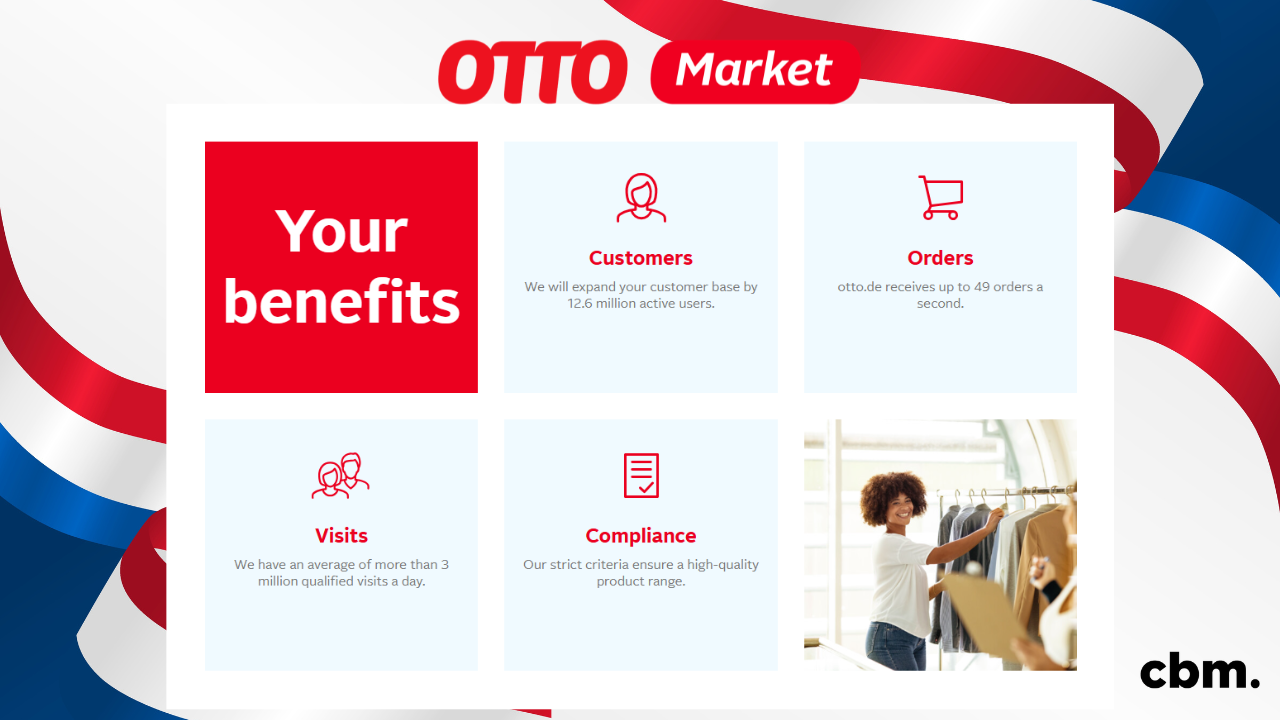
Otto.de, Germany's second-largest online marketplace, has opened its platform to Dutch retailers. The move marks the first step in a broader European expansion strategy and gives Dutch ecommerce businesses access to one of the most significant untapped marketplaces in continental Europe.
Until recently, selling on Otto.de required a German legal entity and a German VAT ID. That barrier no longer applies to Dutch companies. As of March 2026, businesses registered in the Netherlands with a B.V., N.V., or V.O.F. structure and a valid Dutch VAT ID can apply directly, provided they participate in the OSS procedure.
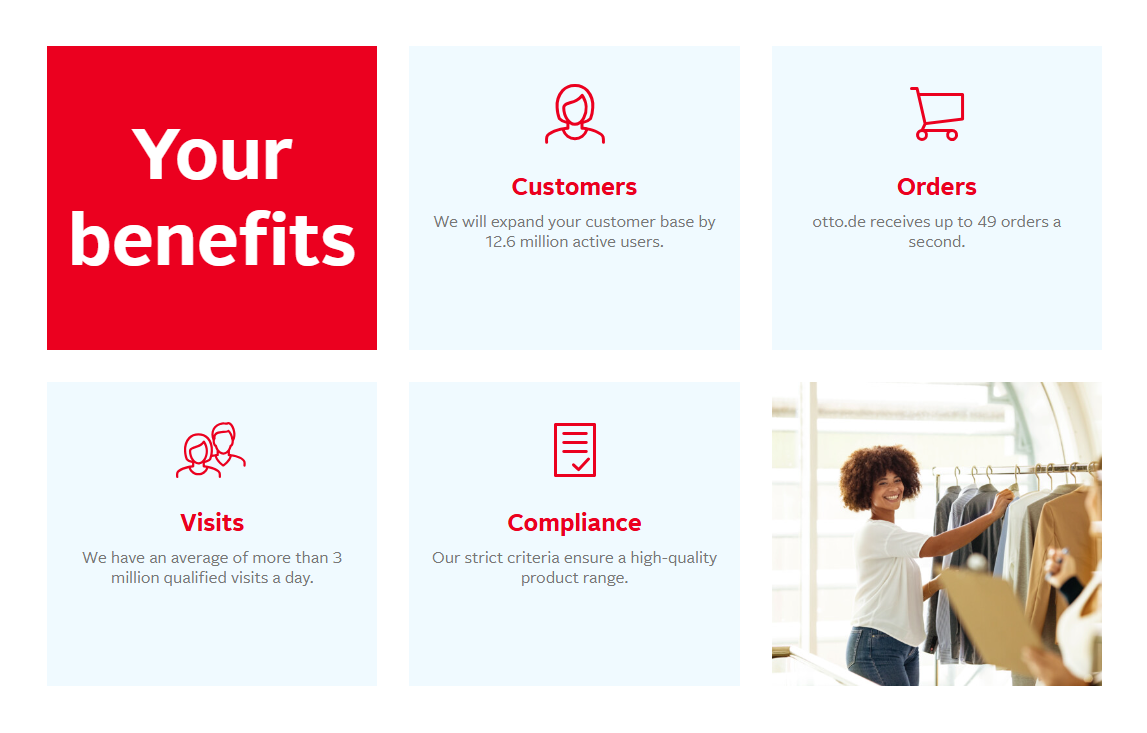
Otto is not a niche player. In the past fiscal year, the platform reached a GMV of approximately 7.5 billion euros, growing 6 percent while the broader German online retail market grew 3.2 percent. The marketplace arm contributed significantly to that growth, increasing by 9 percent and now counting 6,100 active seller partners.
The platform now has 12.6 million active customers and over 19 million products available. Fashion and Sports recorded the strongest category growth, followed closely by Home and Living.
Otto operates a curated marketplace model. Each retailer is individually checked and vetted before being granted access, with quality positioned as the platform's core differentiator. This means the application process takes time, and not every seller will be accepted.
For those who do qualify, the monthly basic fee is €99.90, regardless of the number of products listed. Commission is charged per item sold, with rates determined by product category.
Meeting the eligibility criteria is straightforward for most established ecommerce businesses, but there are four areas to address before applying.
Legal and tax structure. A Dutch legal entity (B.V., N.V., or V.O.F.) with a valid Dutch VAT ID is required. Participation in the OSS procedure, using that Dutch VAT for cross-border purposes, is also mandatory.
Customer service in German. This is the requirement that will determine whether most Dutch sellers can realistically operate on the platform. Otto mandates German-language customer service as a condition of selling, not a recommendation. Native-level support, available across the week including evenings and weekends, is the standard expected by German consumers.
Shipping from an EU warehouse. Products must be shipped from a warehouse located in Germany or elsewhere in the EU.
Returns handling. Returns must be accepted at a warehouse in Germany or one of the selected EU countries: the Netherlands, Denmark, France, Italy, Austria, Poland, Spain, or the Czech Republic.
For Dutch sellers evaluating the opportunity, the logistics and legal requirements are manageable. The German customer service requirement is where the decision often gets complicated.
German consumers have high expectations for customer support, in their language, across their preferred channels, and outside standard office hours. A part-time German speaker or a translated support script will not meet that bar. Otto is explicit about this: quality is the platform's top priority, and it applies the same standards to its sellers as to its own operations. otto
Sellers who cannot credibly deliver German-language support risk both their seller rating and their continued access to the platform. Getting this right from the start is significantly easier than fixing it under pressure after go-live.
For companies without existing German-speaking capacity, outsourcing to a specialist customer service provider with native German agents is the most reliable route. Pay-per-interaction models, which charge only for actual volume handled, make this accessible even for sellers starting at lower order volumes on a new platform. Our partner Salesupply, for example, provides native German customer service for ecommerce brands on exactly this basis.
Otto's international expansion does not stop with the Netherlands. Sellers from Poland, Austria, France, and Spain are expected to be able to apply later in 2026, with Danish retailers following in early 2027. For European ecommerce brands with the operational infrastructure to meet Otto's requirements, the window to establish a position on the platform — before the wider European seller base arrives — is now.



By continuing to use the site, you agree to the use of cookies. more information
The cookie settings on this website are set to "allow cookies" to give you the best browsing experience possible. If you continue to use this website without changing your cookie settings or you click "Accept" below then you are consenting to this.