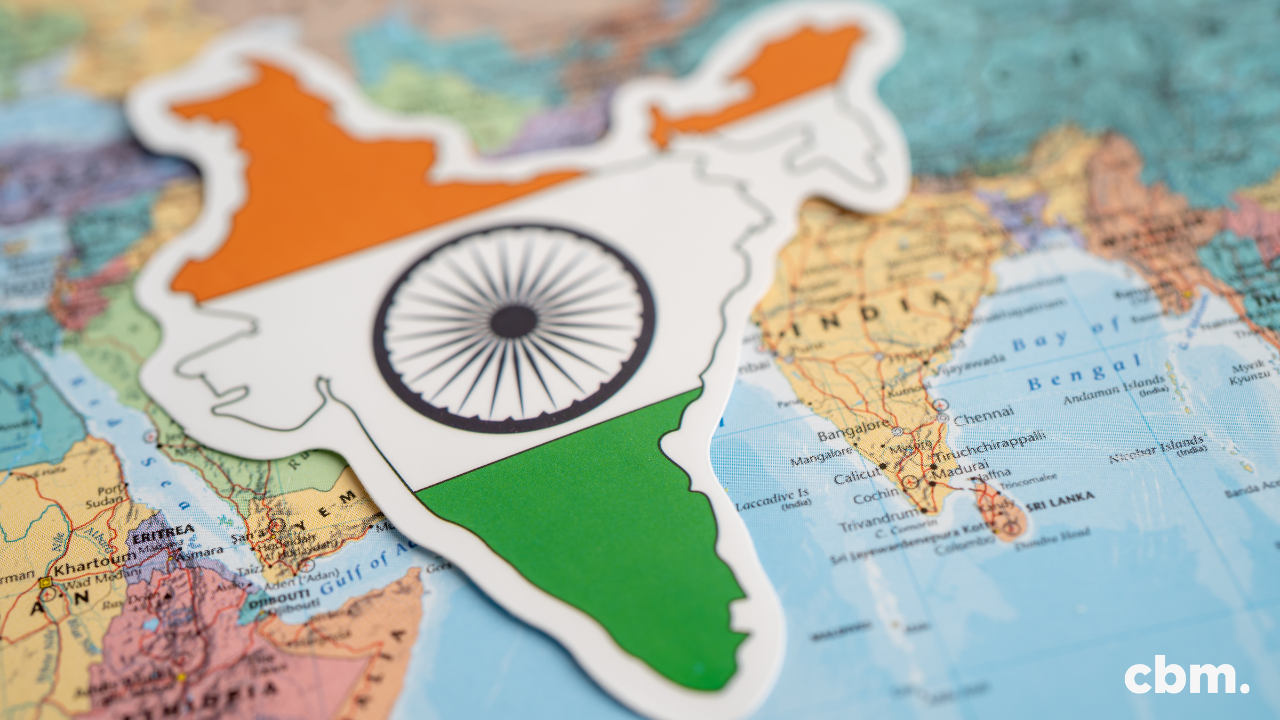
India's e-commerce market generated an estimated $2.5 billion in gross merchandise value (GMV) during the opening two days of its 2026 festive shopping season, as major marketplaces including Amazon, Flipkart and Meesho reported exceptional consumer activity. According to Redseer Strategy Consultants, between 60 million and 65 million consumers placed about 80 million to 90 million orders on October 8 and 9, underscoring the growing scale of one of the world's most dynamic digital retail markets.
Total sales reached about ₹24,000 crore, roughly six times the normal daily GMV. However, the most significant development concerns the changing geographical distribution of online shoppers. About two-thirds of participating consumers came from smaller cities and rural markets, while first-time online shoppers doubled compared with the previous year. The figures suggest that India's e-commerce expansion is increasingly extending beyond its largest metropolitan areas, supported by affordable products, flexible payment options and improving fulfillment infrastructure.
Amazon's Great Indian Festival 2026 recorded more than 440 million visits during its opening phase, with over 72% originating outside India's nine largest metropolitan areas. The company also reported that the number of products ordered more than doubled year over year during the first 12 hours. Smartphones, electronics, fashion, beauty products and household essentials were among the most popular categories, reflecting the growing diversification of online purchasing.
Payment flexibility played an important role in Amazon's performance. About half of participating customers used equated monthly installment (EMI) plans, while one-third of purchased units benefited from cashback incentives. The company also highlighted the growing importance of Amazon Now, its rapid-delivery service, as consumers increasingly expect shorter fulfillment times alongside competitive prices.
Flipkart reported approximately 6.3 million concurrent users during the opening hour of its Big Billion Days event, with around 60% of demand coming from non-metropolitan markets. Its quick-commerce service, Flipkart Minutes, also saw a significant rise in orders, showing that rapid delivery is becoming an increasingly important competitive factor in Indian retail.
Meanwhile, Meesho reported a 75% year-over-year increase in orders on the first day of its Mega Blockbuster Sale, along with about 60% growth in transacting customers. Its performance reflects the continued expansion of value-oriented e-commerce, particularly among consumers in smaller towns and cities seeking affordable merchandise.
These figures are company-reported results covering different measurement periods and should not be interpreted as directly comparable market shares.
One of Redseer's most important findings is that about two-thirds of festive shoppers came from outside India's largest metropolitan areas. Expanding smartphone access, digital payments, and logistics networks are making online shopping increasingly accessible to consumers in Tier 2 and Tier 3 cities, smaller towns, and rural communities.
The number of first-time online shoppers doubled compared with the previous year's festive season, suggesting that promotional events are attracting new consumers rather than merely increasing purchases among existing customers. Younger shoppers are also becoming increasingly influential, with Generation Z representing about one-third of participants on opening day.
For international brands and marketplaces, these developments reinforce the importance of localized strategies that consider regional purchasing power, product preferences, payment methods and delivery infrastructure. Reaching India's next generation of online consumers will increasingly depend on serving markets beyond traditional metropolitan retail centers.
Smartphones accounted for approximately 38% to 40% of total GMV during the opening two days, representing an estimated ₹9,100 crore to ₹9,600 crore in sales. Consumer electronics and large appliances contributed another 25% to 27%, while fashion accounted for about 15% to 18% of transaction value.
Demand for televisions, refrigerators, air conditioners, and laptops was particularly strong, supported by promotional discounts, installment payments, and seasonal purchasing patterns. The popularity of larger televisions and other bulky products also highlights the importance of specialized fulfillment capabilities, particularly as online retail expands into smaller markets.
Fashion GMV rose 22% to 25% year over year, with affordable festive clothing driving strong demand. Products priced below ₹500 performed particularly well, underscoring the importance of accessible pricing for consumers new to online retail.
Rapid-delivery platforms generated approximately four to five times their normal daily GMV during the opening two days, according to Redseer. An estimated 14 million to 15 million consumers participated in quick commerce, illustrating the growing importance of convenience and delivery speed in India's digital retail ecosystem.
Originally focused on groceries and everyday essentials, quick commerce is increasingly expanding into electronics accessories, personal care, household products, and other categories suitable for rapid fulfillment. Amazon Now and Flipkart Minutes reflect established marketplaces' growing interest in this model.
However, quick commerce requires a different logistics structure from conventional e-commerce. Maintaining inventory close to consumers depends on dense networks of local fulfillment facilities, accurate demand forecasting, and sufficient order volumes to support short delivery routes. Expanding these capabilities beyond densely populated urban markets will remain a significant operational challenge.
India's online retail market is diversifying geographically, driving growing demand for regional warehousing, transportation networks, and last-mile delivery services. Serving consumers across smaller cities and rural communities requires more extensive distribution infrastructure than traditional metropolitan-focused fulfillment models.
For marketplaces and third-party logistics providers, the challenge is to balance delivery speed, inventory availability, and operating costs. High-volume promotional events intensify these pressures by concentrating millions of orders into a relatively short period, increasing demand for warehouse processing capacity, transportation, and customer support.
International brands entering India must also consider domestic distribution, customs requirements, local consumer preferences, and the economics of reaching customers across different regions. Competitive pricing remains essential, but reliable fulfillment and flexible payment options are becoming equally important components of the purchasing experience.
India's estimated $2.5 billion in festive e-commerce sales during just two days demonstrates the scale and growing maturity of its online retail sector. Up to 65 million shoppers, combined with strong demand for smartphones, electronics, fashion, and quick commerce, highlights the market's growing diversity.
More importantly, the expansion beyond major metropolitan areas suggests that India's next phase of e-commerce growth will depend heavily on smaller cities, new digital consumers and the infrastructure required to serve them. Amazon, Flipkart and Meesho are competing through different combinations of pricing, product selection, financing and fulfillment capabilities, while Redseer forecasts that approximately 100 million consumers could participate during the first 11-day phase of the festive shopping season.
For the global e-commerce industry, India's performance offers a clear example of how digital retail growth is increasingly driven by broader consumer participation, localized commerce strategies and the continued development of efficient fulfillment networks.



By continuing to use the site, you agree to the use of cookies. more information
The cookie settings on this website are set to "allow cookies" to give you the best browsing experience possible. If you continue to use this website without changing your cookie settings or you click "Accept" below then you are consenting to this.