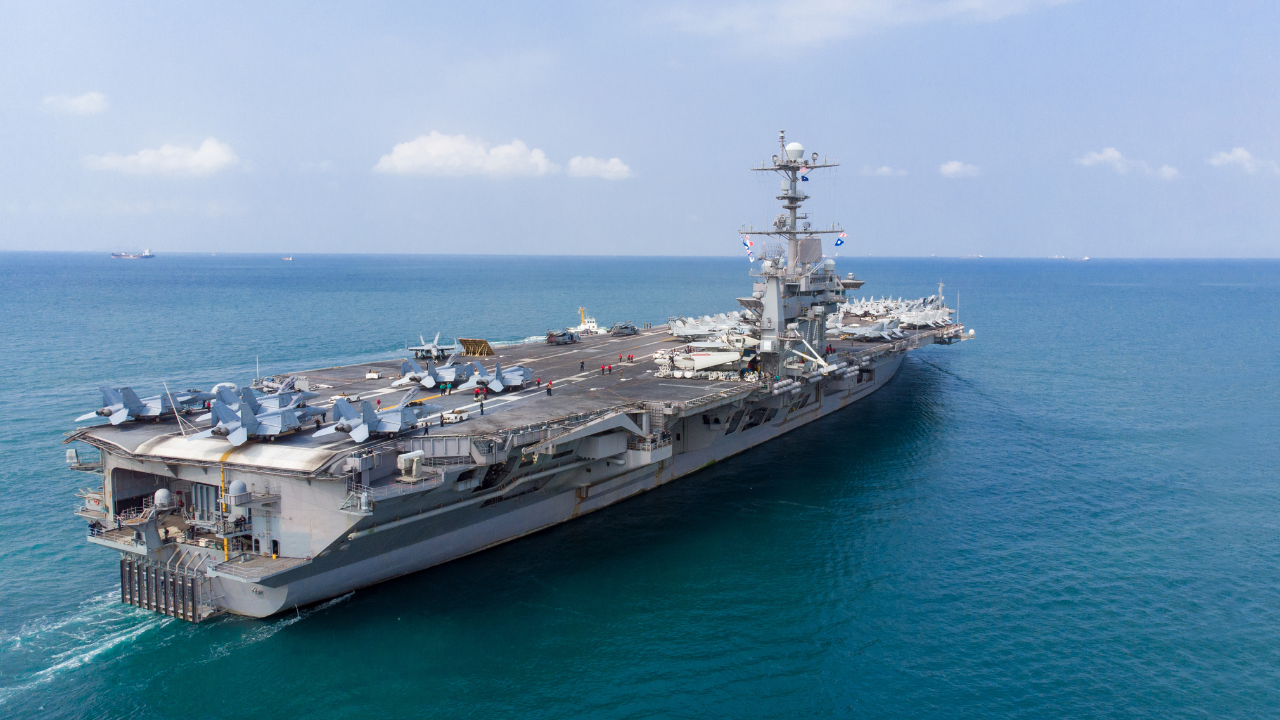
Things look bad in the Suez Canal. Last week, the arrival of a new US Navy Attack Group to the area, in response to the recent piracy and terror attacks on multiple international cargo ships, was a clear indication that the situation is bound to escalate.
And the grim forecast was true: BP was the latest company to halt the transport of its oil tankers through the Red Sea after dozens of attacks on commercial vessels claimed by the Iranian-backed Huthi rebel group.
Yemeni rebels, aligned to the Shiite branch of Islam, have seized or hijacked about 10 commercial vessels in recent weeks as commercial retribution to Israel and in support of the Palestinian people.
In recent days, four of the most significant shipping companies have paused or halted their operations in the strait, such as Maersk, Hapag-Lloyd, CMA CGM, and MSC, due to the high level of risk.
The firms, responsible for almost half of the market share, have soared on the stock market following their decision. Shares of Denmark's Maersk rose 4.7% on the Copenhagen Stock Exchange on Monday.
The oil giant's decision to pause its trade comes after the latest attack on the Swan Atlantic tanker, seized by rebels on Monday, which was sailing near the Bab el Mandeb strait, according to its owner, Norway's Inventor Chemical Tankers. The canal means "the gate of tears" in Arabic because of its location in the geopolitically tense area between Yemen, Djibouti and Eritrea.
The Suez Canal Authority reported last Sunday that shipping must turn to the Cape of Good Hope route, which passes through the southern tip of Africa. A bottleneck in the Red Sea will force ships to turn to these long and expensive alternative routes.
According to the experts, it is estimated that this route could add ten to fifteen days of travel time to the usual routes and, in the worst case, will force companies to resort to nearshoring and direct business to markets such as Turkey and Morocco to bypass the Red Sea.




By continuing to use the site, you agree to the use of cookies. more information
The cookie settings on this website are set to "allow cookies" to give you the best browsing experience possible. If you continue to use this website without changing your cookie settings or you click "Accept" below then you are consenting to this.