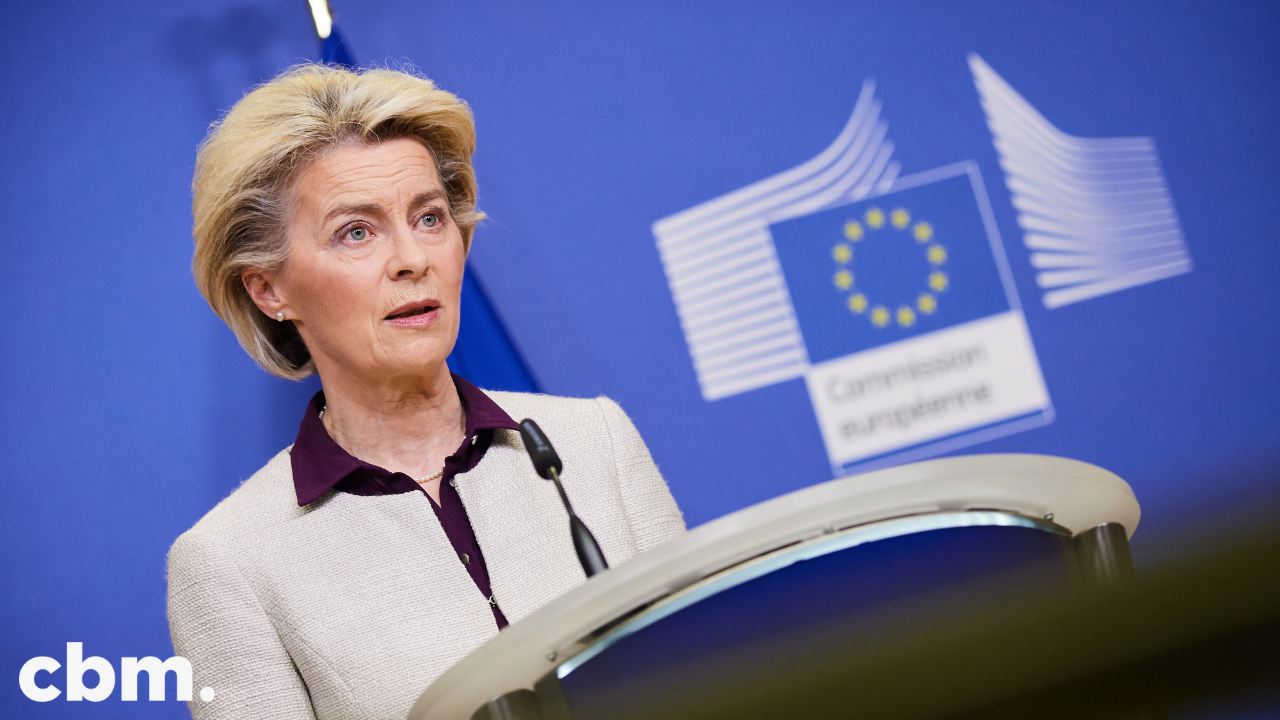
When Ursula von der Leyen publicly announced EU Inc in January 2026, she did more than introduce a new policy concept. As President of the European Commission, she explicitly referenced a single European company structure, marking a strategic shift in how the EU approaches business creation and growth.
By naming EU Inc and linking it directly to the long-discussed “28th regime,” von der Leyen elevated the idea from ecosystem debate to institutional priority. The message was clear: if Europe wants companies to grow at a continental scale, it must give them a legal structure that matches that ambition.
For years, entrepreneurs, investors, and policymakers have pointed to the same structural problem. The EU may be a single market in economic terms, but from a company-law perspective, it remains fragmented. Every business must still anchor itself in one national legal system, even when its market, team, and growth plans are clearly pan-European.
Von der Leyen’s announcement matters because it acknowledges this mismatch at the highest political level and frames it as a competitiveness issue rather than a technical legal detail.
At the core of EU Inc is the idea of a single, optional EU-wide legal entity. Instead of building a business around one national framework and later adapting it to others, companies would be able to incorporate once under a structure recognised across all member states.
This single-entity model directly addresses one of the biggest frictions in European entrepreneurship: the need to manage multiple corporate identities for what is, in reality, one business.
Von der Leyen’s framing of EU Inc positions Europe itself as the natural home market for new businesses. Rather than thinking in terms of domestic companies that later expand abroad, founders could create businesses that are European by design from day one.
This approach aligns with the legal structures of many modern companies, especially in digital, SaaS, platform, and service-driven sectors.
Choosing where and how to incorporate is one of the first strategic decisions a founder makes. Today, that choice often reflects legal convenience rather than business strategy.
A single EU-level entity simplifies this decision. Founders with pan-European ambitions would no longer need to compare national regimes or worry about future legal migrations. Business creation becomes faster, clearer, and more aligned with growth goals.
Early-stage companies are particularly sensitive to legal and administrative overhead. Fragmented company law increases costs at exactly the moment when resources are scarce.
EU Inc, as presented by von der Leyen, aims to reduce this friction by offering a standardised framework that works across borders, allowing founders to focus on building products, finding customers, and validating markets.
As companies expand into new EU countries, they often face repeated structural changes: new entities, revised governance, duplicated reporting, and complex internal arrangements.
A single pan-European entity reduces the need for constant restructuring. Companies can expand operations across borders while maintaining a single core legal identity, making growth additive rather than disruptive.
Von der Leyen’s announcement reinforces the idea that the EU should function as a genuine internal market for companies, not just for goods and services.
A unified legal entity helps businesses treat expansion across member states as internal growth rather than internationalisation, which has significant psychological and operational effects on how companies plan and execute their strategies.
Fragmented legal structures often lead to complex ownership arrangements, slowing investment decisions. Multiple entities and jurisdictions complicate due diligence and governance.
A single EU-level entity simplifies ownership by consolidating it into a single cap table under a single legal framework. This clarity benefits founders and investors alike and supports smoother cross-border funding rounds.
By reducing legal fragmentation, EU Inc could make it easier for investors to deploy capital across borders. Over time, this supports deeper integration of European capital markets and improves access to funding for growing companies without forcing them to relocate outside the EU.
One of the underlying motivations highlighted by von der Leyen is competitiveness. When scaling within the EU is structurally complex, companies are more likely to incorporate or relocate elsewhere.
A single pan-European legal entity reduces this pressure by making Europe a more coherent and attractive environment for long-term growth.
Historically, Europe has struggled to produce companies that scale seamlessly across borders. Fragmented company law has been a silent but powerful constraint.
EU Inc directly targets this issue by enabling companies to exist legally at the same scale at which they are expected to compete economically.
EU Inc is not a promise to harmonise taxation, labour law, or all regulatory frameworks overnight. Those areas will remain largely national. What von der Leyen’s announcement does promise is a serious attempt to remove one of the most persistent structural barriers to pan-European business growth: corporate fragmentation.
The significance of the EU Inc announcement lies less in technical details and more in political intent. By publicly endorsing a single pan-European company structure, Ursula von der Leyen signalled that the EU recognises legal fragmentation as a growth problem and is willing to address it at a structural level.
If implemented effectively, EU Inc could reshape how businesses are created and scaled inside the EU, turning the single market into a practical reality for companies, not just a regulatory principle.




By continuing to use the site, you agree to the use of cookies. more information
The cookie settings on this website are set to "allow cookies" to give you the best browsing experience possible. If you continue to use this website without changing your cookie settings or you click "Accept" below then you are consenting to this.