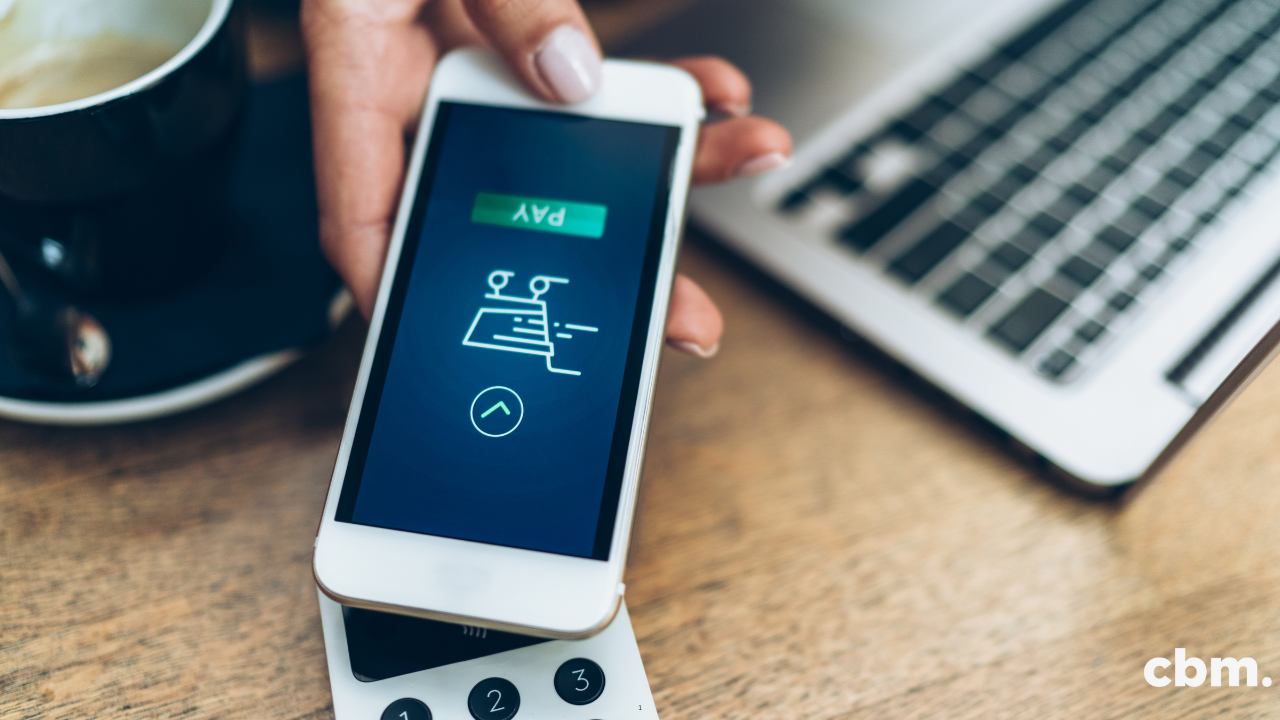
Mobile payment adoption across the EU continues to accelerate. A recent OECD-supported study indicates that up to 59% of e‑commerce transactions in selected European countries are already executed through digital payments, with projections reaching 75% by 2030.
According to Mordor Intelligence, the European mobile payments market is expected to grow from USD 136.45 billion in 2025 to nearly USD 476.25 billion by 2030, with a 28.4% CAGR. In mobile commerce applications, retail and e‑commerce already contribute more than 35% of market value.
In countries such as the UK, Germany, and France, digital wallets are used by over 20% of consumers every week as of 2024. The Netherlands stands out, with more than 80% of consumers using Pay-by-Bank options monthly for online purchases.
In Eastern European markets like Poland, Romania, and Turkey, digital wallet adoption is growing steadily. However, card-based transactions still dominate. In Turkey, for instance, 65% of online transactions were card-based in 2023, though contactless and mobile options are expanding.
Wero, the digital wallet by the European Payments Initiative (EPI), launched in Germany in July 2024 and is expanding to France and Belgium. Support for online commerce began rolling out in mid-2025—major banks and payment providers, including Worldline and Nuvei, back the wallet.
The European Payments Alliance (EuroPA) is a coalition of national payment schemes like Bizum, Bancomat, and MB Way, aimed at creating a cross-border instant payment network. Since early 2025, it has expanded into Slovakia, Norway, Greece, and Poland, offering seamless mobile transactions across regions.
Mobile payments offer fast, secure, and user-friendly checkout experiences. According to OECD data, point-of-sale mobile payments in the EU rose from €4 billion in 2017 to €195 billion in 2022, accounting for 21% of all POS value—with forecasts predicting 36% by 2030.
Merchants benefit from faster settlement, lower processing costs, and reduced fraud. Regulatory support under PSD2 and open banking fosters competition, enabling alternatives to high-fee card networks through instant account-to-account payment rails.
Despite rising adoption, cards still dominate e‑commerce in many EU markets, particularly in the east. Full online functionality for new wallets, such as Wero, is still being rolled out as of mid-2025. Legacy schemes such as iDEAL, Paylib, and Payconiq will be phased out gradually by 2027.
A significant milestone was reached in June 2025, when the EPI and EuroPA announced plans to unify under a single, interoperable EU payment framework, covering up to 15 countries and over 380 million consumers. This initiative aims to strengthen EU payment sovereignty and reduce reliance on US-based networks.
E‑commerce businesses should integrate leading mobile wallet solutions such as Bizum, MB Way, Bancomat, and Wero as they become available in their respective markets. Offering Pay-by-Bank options can also reduce transaction fees and meet consumer demand.
With EuroPA and Wero expanding across multiple EU countries, merchants should prepare for increased cross-border wallet interoperability. Supporting seamless mobile payment experiences for users across different EU markets will be critical to retaining customers.
Merchants should stay updated on EU regulatory developments, such as PSD2 updates or new digital ID initiatives, that may impact payment flows. Embracing these technologies early will position businesses ahead of competitors.
Mobile payments are reshaping the future of e‑commerce across the EU. Driven by consumer demand, wallet innovation, and coordinated EU initiatives like Wero and EuroPA, the region is on the path to creating an integrated, sovereign digital payment infrastructure. Businesses that act now to adopt mobile-first strategies, support instant bank transfers, and stay abreast of the evolution of EU-led solutions will be well-equipped to thrive in the coming decade.


By continuing to use the site, you agree to the use of cookies. more information
The cookie settings on this website are set to "allow cookies" to give you the best browsing experience possible. If you continue to use this website without changing your cookie settings or you click "Accept" below then you are consenting to this.