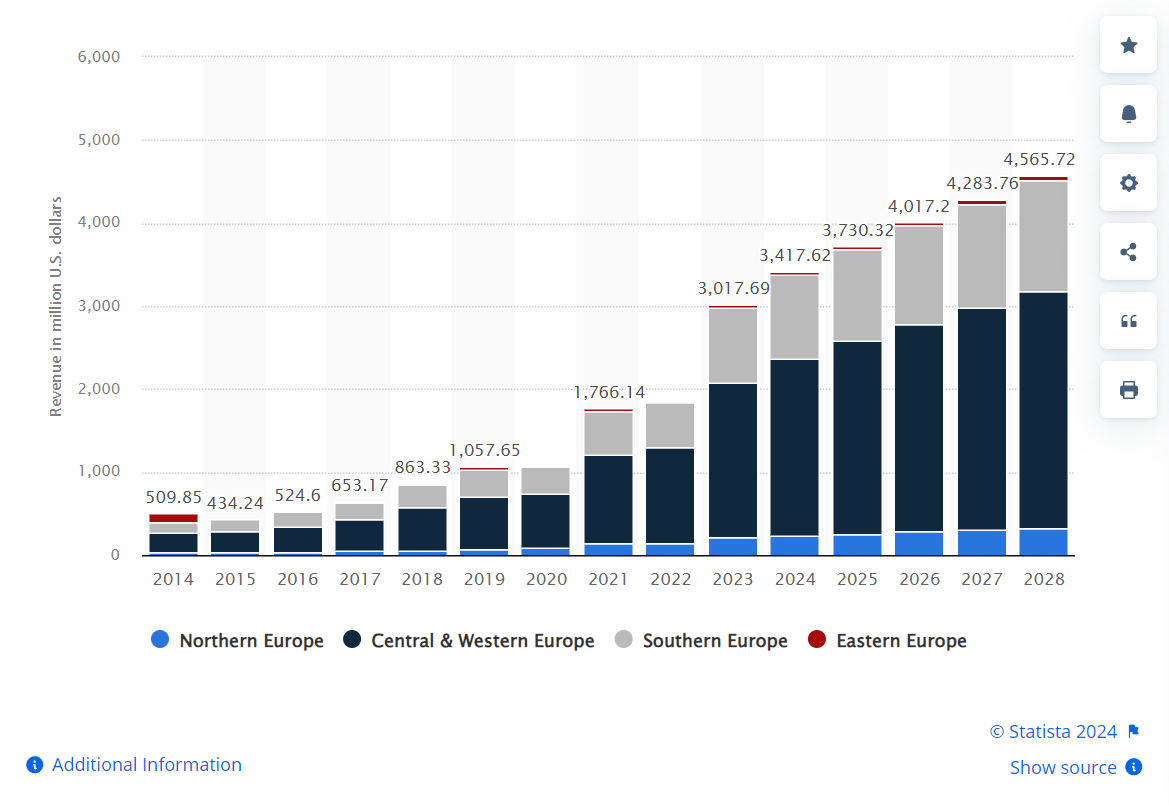
The second-hand luxury goods market in Europe keeps growing strong. With an estimated of around three billion U.S. dollars in 2023, and Central & Western Europe accounting for roughly 62% of the total market revenue, second-hand luxury has become a profitable sector that is pushing some of the leading luxury global brands to try their luck in it.
According to Statista estimates, the European second-hand luxury goods market is set to see an increase, reaching over 4.6 billion U.S. dollars by 2028. The second-hand luxury market comprises apparel, footwear, leather goods, jewelry, watches, and eyewear purchased via platforms for second-hand luxury goods.
This rise of second-hand luxury products has brought multiple second-hand luxury marketplaces to the game. Among the most popular are: 1stDibs, By Rotation — a fashion rental service — HURR — a bag rental with resale functionalities via direct messages to the brands — and obviously The RealReal, currently the world’s largest online marketplace for authenticated luxury resale, hosting more than 25 million members.
But it is not only the luxury second-hand products the ones getting a lot of love from the EU citizen. All second-hand products — regardless of the category — seem to have increase their acceptance.
In a survey of 5,000 European consumers across Belgium, France, Germany, Italy, Netherlands, and Spain, Adevinta found that half (50%) of all respondents plan to spend less this Christmas due to the high cost of living.
As a result, most people (64%) are considering purchasing second-hand items over the festive period this year. The most cited reasons as to why consumers are considering shopping for second-hand items are the need to save money (47%) and a desire to shop more sustainably (37%).
Last year, nearly one-third (32%) of European consumers turned to the second-hand market for their Christmas shopping needs. The most purchased items were home decorations (45%), gifts for friends or family (39%), and clothing for themselves (36%). Of those considering buying second-hand this year, one-quarter (25%) reported that they like gifting retro or nostalgic items, and a similar proportion (24%) stated they like sourcing items locally.
While many consumers turn to the second-hand market this festive season to cut costs, some hold reservations about preloved gifting. Over a third (35%) of those who did not buy second-hand items last year stated that they prefer to buy brand new, and 40% stated that they don’t want to give used items as gifts.



By continuing to use the site, you agree to the use of cookies. more information
The cookie settings on this website are set to "allow cookies" to give you the best browsing experience possible. If you continue to use this website without changing your cookie settings or you click "Accept" below then you are consenting to this.