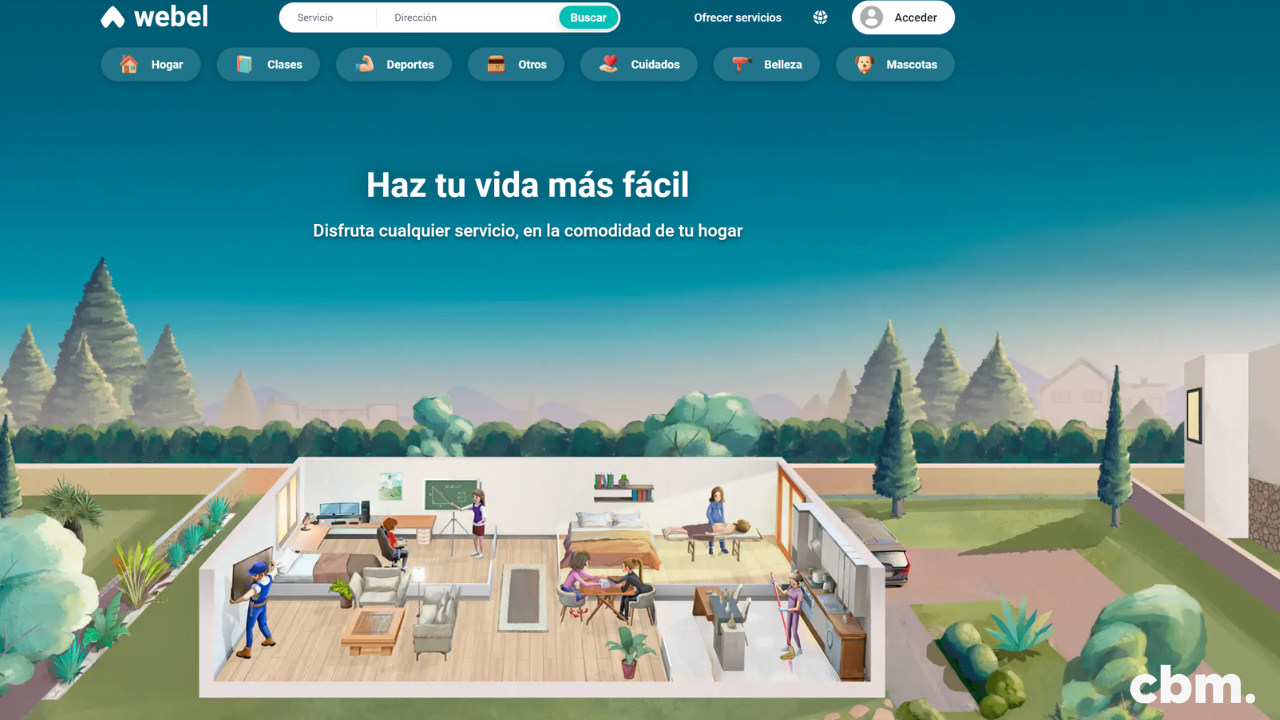
Madrid-based Webel has closed a €4.3 million Pre-Series A funding round, marking an important milestone for the fast-growing digital marketplace. The new investment will support the company’s expansion across Europe, strengthen its technology platform, and accelerate its ambition to become a leading home services super app in the region.
Although Webel does not operate in traditional retail e-commerce, its funding round is highly relevant for the wider digital commerce sector. The company represents a fast-rising category of transaction platforms that connect consumers with service providers through seamless online experiences. This model reflects growing investor confidence in marketplaces built around services rather than physical goods.
Webel is a technology platform designed to simplify the booking of home services. Through its app and marketplace infrastructure, users can quickly find and hire trusted professionals for tasks such as cleaning, beauty services, repairs, wellness, and other on-demand needs.
The platform focuses on convenience, speed, and trust. Customers can search for services, compare options, schedule appointments, and pay digitally, all within one ecosystem. For service professionals, Webel offers a digital channel to acquire customers, manage bookings, and grow revenue.
This two-sided marketplace structure places Webel in one of the most dynamic segments of modern e-commerce: digital transactions for local services.
The €4.3 million Pre-Series A round sends a strong signal about where venture capital is flowing. Investors are increasingly backing platforms that digitize fragmented industries and create recurring transaction volume.
Home services remain one of the largest categories still undergoing digital transformation. Many bookings across Europe are still arranged through phone calls, word of mouth, or disconnected local directories. Platforms like Webel modernize this process by bringing discovery, scheduling, payments, and trust mechanisms into one user-friendly experience.
For investors, this creates several attractive advantages:
Home services represent a massive market across Europe, spanning millions of households and thousands of small service providers.
Unlike one-time retail purchases, services such as cleaning, beauty, or maintenance can generate frequent repeat transactions.
Once the marketplace infrastructure is built, expansion into new cities and countries can happen faster than building physical operations from scratch.
Efficient customer acquisition, repeat bookings, and platform commissions can create a path to sustainable profitability.
When many people hear the term e-commerce, they think of online stores selling products. However, digital commerce now extends far beyond physical goods. Consumers increasingly expect to buy services online with the same speed and simplicity as ordering products.
This shift has created major opportunities for service marketplaces. Instead of shipping inventory, these businesses facilitate transactions between supply and demand. Their value lies in matching users with providers, ensuring trust, simplifying payments, and delivering a smooth customer experience.
Examples of this broader commerce evolution include:
Cleaning, plumbing, electrical work, beauty appointments, and wellness bookings.
Tutoring, coaching, photography, or personal training.
Recurring household maintenance or regular cleaning packages.
Platforms that combine products and services in one ecosystem.
Webel is positioned within this growing movement, where convenience and digital access drive consumer behavior.
Webel’s growth also highlights Madrid’s increasing importance in the European startup landscape. The Spanish capital has become a strong base for technology companies thanks to its combination of talent, international connectivity, and lower operating costs compared with some other major European cities.
Madrid offers several advantages for scaling startups:
The city attracts engineers, marketers, product managers, and multilingual customer support teams.
Spain provides a sizable testing ground before broader European expansion.
Madrid offers strategic connections for companies targeting multiple international markets.
More venture capital firms are actively looking at high-growth startups emerging from Spain.
For Webel, being headquartered in Madrid provides a strong foundation for continental expansion.
The fresh capital gives Webel multiple strategic options as it moves into its next phase of growth.
The most obvious use of funds is launching in additional European cities and countries. Marketplace businesses often scale city by city, ensuring supply and demand balance in each new market.
Improving the user experience is essential. This could include better matching algorithms, faster booking flows, personalized recommendations, and enhanced provider tools.
Consumer trust is critical in home services. Marketing investment can help Webel become a recognized and trusted name in each market it enters.
Attracting high-quality service professionals is just as important as attracting customers. Funds may be used to recruit and retain providers through incentives and onboarding support.
Customer service, dispute resolution, fraud prevention, and quality control all become increasingly important as marketplace volume grows.
While the opportunity is significant, scaling a service marketplace across Europe also presents challenges.
Consumer preferences, pricing expectations, and service categories vary by country and city.
Maintaining high standards across thousands of providers requires strong vetting and review systems.
Users must feel safe inviting professionals into their homes, making trust and transparency essential.
Local players and international apps may already operate in target markets.
Growth depends on maintaining enough providers to meet customer demand without oversaturating supply.
Companies that solve these challenges effectively can build durable market leadership.
Webel’s funding round reflects a broader trend in European digital commerce. Investors are increasingly looking beyond pure retail and backing platforms that facilitate everyday transactions.
This signals a maturing market where value is created not only through selling products but through simplifying services, logistics, subscriptions, and local commerce. As consumer habits evolve, the line between e-commerce, marketplaces, and digital services continues to blur.
For founders, the message is clear: if you can digitize a large offline category and deliver measurable convenience, there is investor appetite.
The Webel story offers several lessons for businesses operating online.
Users choose platforms that save time and reduce friction.
Ratings, reviews, guarantees, and transparent pricing remain essential.
Recurring transactions create stronger lifetime value than one-off purchases.
Even digital-first businesses must adapt to local market realities.
Automation and seamless user experience are critical growth levers.
Webel’s €4.3 million Pre-Series A is more than a startup funding story. It is evidence that investors see major potential in service marketplaces and transaction platforms across Europe. As digital commerce expands beyond retail, companies that modernize everyday services are attracting increasing attention.
With fresh capital, a scalable marketplace model, and a strong base in Madrid, Webel enters its next chapter with momentum. Its progress will be closely watched by investors, founders, and the wider European e-commerce ecosystem.