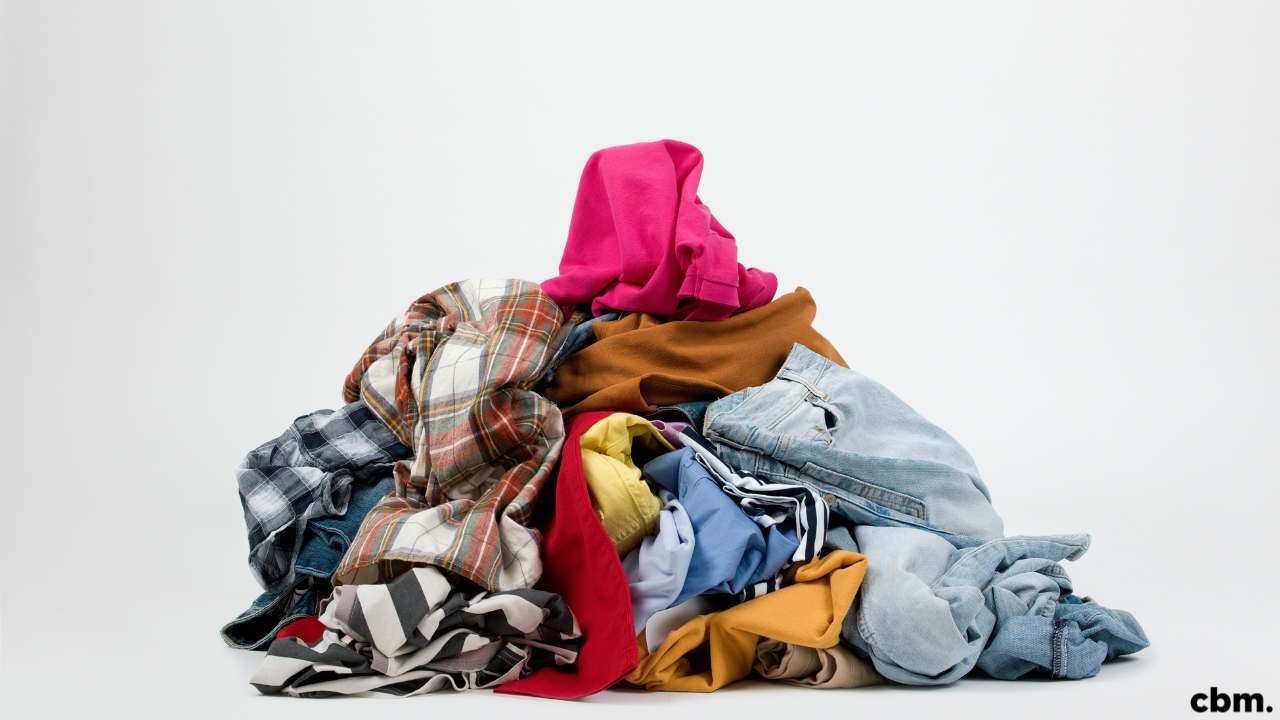
Large fashion companies operating in the European Union can no longer destroy unsold clothing, accessories and footwear under a new rule intended to reduce textile waste and promote more circular business models.
The prohibition entered into application on July 19, 2026, under the EU’s Ecodesign for Sustainable Products Regulation, commonly known as the ESPR.
The measure directly affects fashion brands, retailers, marketplaces and e-commerce companies that manage excess inventory, discontinued collections and returned products. Instead of sending usable goods to landfill or incineration, affected businesses must prioritize resale, donation, repair, refurbishment, remanufacturing or recycling.
For the fashion e-commerce sector, the regulation transforms returns and excess inventory from a cost-management issue into a compliance priority.
The prohibition applies to unsold:
Large companies are affected from July 19, 2026. Medium-sized enterprises are expected to be subject to the same prohibition as of July 19, 2030, while micro and small businesses are currently exempt.
The rule covers products that were never sold as well as returned goods that remain suitable for resale, repair or reuse.
Companies must follow the EU waste hierarchy. This means prevention and reuse should be prioritized before recycling, incineration or disposal.
Discount sales, outlet distribution, secondary marketplaces, donation programs and repair services may therefore become increasingly important routes for unsold stock.
The European fashion sector generates significant waste before many products are ever used.
According to figures referenced by the European Commission, between 4% and 9% of textile products placed on the European market are destroyed before use. This represents an estimated 264,000 to 594,000 tonnes of textiles annually.
The Commission also estimates that destroying unsold textiles generates approximately 5.6 million tonnes of carbon dioxide emissions every year.
These figures include more than the environmental impact of disposal. Every destroyed product also represents wasted raw materials, water, energy, transport and labor.
The prohibition is intended to discourage overproduction and encourage brands to improve forecasting, stock management and product circulation.
Products may still be destroyed in limited and justified circumstances.
Possible exceptions include goods that:
However, high storage costs, reduced profitability or the difficulty of reselling a product are not sufficient reasons for destruction.
Businesses using an exception must be able to prove why destruction was necessary. This may require safety reports, damage assessments, correspondence with donation partners or evidence that reuse and recycling options were unavailable.
Relevant documentation must generally be retained for 5 years to allow national authorities to inspect it.
Online fashion retailers are particularly exposed because they normally process higher return volumes than physical stores.
Customers often order several sizes, styles or colors and return the products they do not want. Returned goods may arrive with damaged packaging, missing labels or signs of handling. Seasonal products can also lose value while they move through the returns process.
In the past, some companies concluded that inspecting, cleaning, repackaging and restocking a low-value product cost more than disposing of it.
That calculation must now include regulatory compliance.
A product cannot be destroyed simply because processing it is expensive. Retailers must determine whether it can be resold, repaired, donated or recycled before considering disposal.
This increases the importance of fast returns processing. The longer a product remains in a returns center, the more likely it is to lose commercial value.
Retailers need visibility over what happens to every returned or unsold product after it reaches a warehouse, fulfillment center, store or logistics partner.
A compliant reverse-logistics operation should be able to direct products towards:
This will require better product grading and stronger links among order management, inventory, and warehouse systems.
Companies should also review contracts with fulfillment and waste-management providers. Agreements should clearly explain who assesses returned goods, who approves disposal and who stores the evidence supporting each decision.
Outsourcing logistics does not necessarily remove the retailer’s regulatory responsibility.
The ban is likely to increase the supply of clothing and footwear available for resale.
Brands may expand official second-hand stores, outlet platforms, refurbishment programs and partnerships with recommerce marketplaces.
Other companies may use business-to-business liquidation networks to sell excess stock to authorized resellers rather than destroying it.
Luxury brands face a more complex challenge. Heavy discounting can weaken exclusivity, while uncontrolled liquidation may place products in unauthorized sales channels.
These companies may need to develop controlled resale programs, authenticated second-hand platforms or material-recovery systems that protect both compliance and brand value.
The best way to avoid problems with unsold stock is to produce and purchase more accurately.
Fashion businesses are likely to invest further in artificial intelligence, predictive analytics and real-time stock visibility.
Useful measures include:
Retailers that identify weak demand early can redirect stock while it still has commercial value.
The regulation may therefore favor companies with flexible supply chains over businesses dependent on large advance orders and long production cycles.
Online marketplaces may also be affected when they own inventory, provide fulfillment services or determine how returns are processed.
They must establish who owns a returned product, who decides whether it can be resold and who is responsible for documenting any disposal.
Marketplaces may need to revise automatic destruction settings and provide sellers with clearer resale, donation and recycling options.
This is especially important for fulfillment programs in which merchants have limited control over how returned or aging stock is handled.
Affected businesses should immediately review every point at which returned or unsold stock leaves their inventory.
Priority actions include:
Companies should also prepare for disclosure obligations that require greater transparency about the quantity and types of unsold goods they discard.
The ban on destroying unsold clothing and footwear is part of the EU’s wider effort to make textiles more durable, repairable and recyclable.
For fashion e-commerce, its impact will be felt across inventory planning, returns management, fulfillment, resale and logistics.
Unsold products can no longer be treated as disposable stock. They must be tracked and directed towards the most valuable compliant alternative.
Businesses with accurate forecasting, efficient reverse logistics and established resale networks will be best positioned to adapt.
For the European fashion industry, destruction is no longer the simplest answer to excess inventory.




By continuing to use the site, you agree to the use of cookies. more information
The cookie settings on this website are set to "allow cookies" to give you the best browsing experience possible. If you continue to use this website without changing your cookie settings or you click "Accept" below then you are consenting to this.