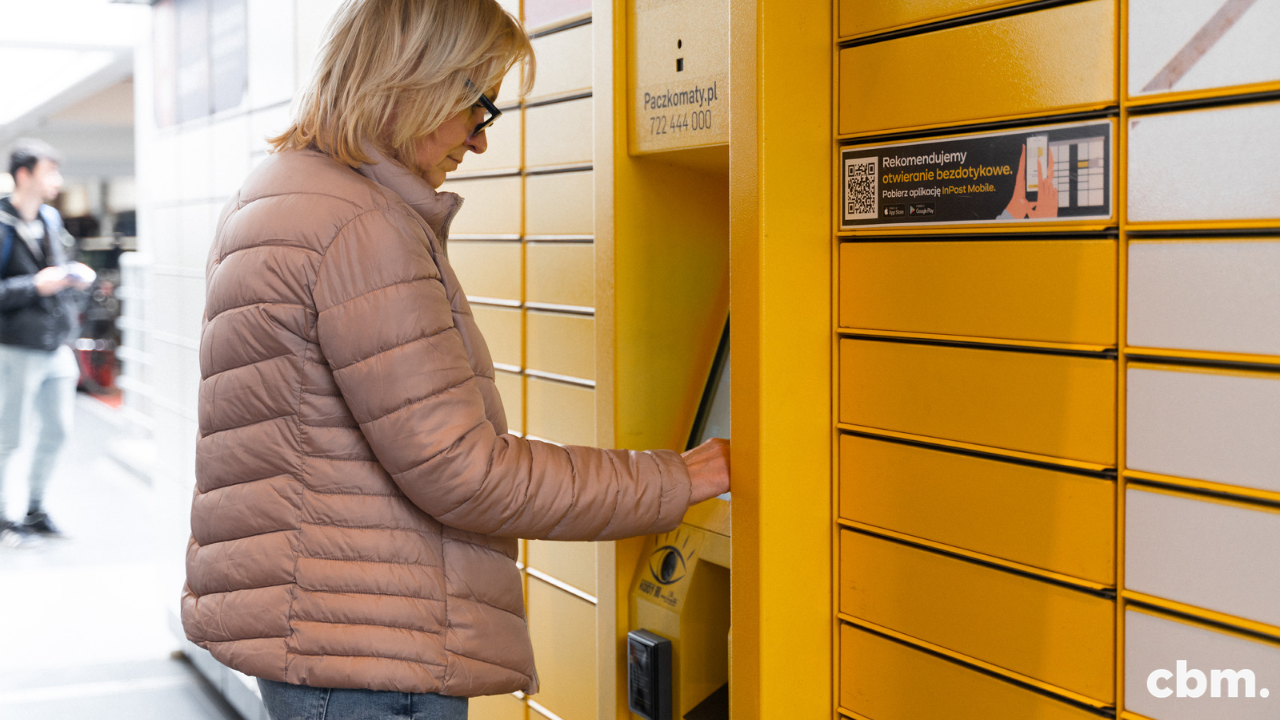
Parcel lockers in Europe are becoming an increasingly important part of online retail infrastructure. For cross-border businesses, they offer a way to connect international fulfillment with convenient local collection. Their commercial value depends on network access, customer preferences and the quality of the checkout experience.
Out-of-home delivery includes automated lockers and staffed collection points. These formats serve a similar purpose, but differ in opening hours, parcel handling and access. Retailers should distinguish them when comparing coverage or presenting delivery options.
InPost’s 2025 annual report clearly illustrates investment in the sector. The group ended the year with 61,196 automated parcel machines, up 30% year on year, within a wider network of 94,536 out-of-home points. It added more than 14,200 machines during 2025.
Its locker footprint included 28,165 machines in Poland, 13,721 in the UK and 10,045 in France. These are one operator’s network figures, rather than totals for the European market. They nevertheless demonstrate that locker delivery is being deployed at scale across multiple destinations.
For retailers, network growth can widen the range of delivery locations offered to customers. However, a large national footprint does not guarantee convenient access for every postcode or compatibility with every shipping contract.
DHL’s 2025 e-commerce findings show that 35% of surveyed European shoppers preferred delivery to parcel shops or lockers, while 79% preferred returning items through those locations. The combined categories should not be described as locker-only preferences.
The difference between delivery and returns is commercially useful. A customer may prefer home delivery for an incoming order but want a nearby drop-off point when returning it. Retailers can therefore evaluate outbound and reverse logistics separately.
For cross-border e-commerce, a convenient local return point can simplify the customer-facing step. The retailer must still arrange the subsequent transport, inspection and refund process: a local drop-off location does not make the entire return domestic.
Local behaviour remains important. PostNord’s Spring 2026 Norway analysis finds that parcel locker usage is more than twice as common as in 2024. Yet home delivery remains the country’s preferred method, while service points are the most used.
The implication is to offer a suitable mix of services. Lockers may suit customers who want flexible collection, while bulky products, accessibility needs or distance to a collection point can favour another option.
At checkout, retailers should show the actual collection location, opening or access conditions, collection deadline and any size restrictions. Clear information helps shoppers choose a service they can use successfully.
Integration matters as much as physical coverage. Retailers need a location selector that reflects eligible points, labels accepted by the destination network and tracking that continues through international handovers.
Operational planning should cover full lockers, expired collection periods and parcels that exceed permitted dimensions. During peak periods, a nearby alternative point or home-delivery fallback can help manage disruption, subject to the service agreement and customer consent where required.
Environmental claims also need evidence. Consolidating parcels at one stop can improve delivery efficiency, but the overall outcome depends on route density, vehicle use and how customers travel to collect orders. Retailers should avoid presenting every locker delivery as automatically lower-carbon.
Parcel lockers in Europe give cross-border retailers another way to match delivery with customers’ routines. The strongest implementation combines convenient coverage with clear checkout information, reliable tracking and a workable returns process.
Retailers should assess collection success, customer satisfaction and cost per completed order. Those measures reveal whether a growing network is creating value for their particular customers.



By continuing to use the site, you agree to the use of cookies. more information
The cookie settings on this website are set to "allow cookies" to give you the best browsing experience possible. If you continue to use this website without changing your cookie settings or you click "Accept" below then you are consenting to this.