Smart Robotics gets €10M funding in a Series A round designed to accelerate the company’s European expansion and strengthen its AI-powered robotic picking technology for logistics and warehouse operations. The Netherlands-based company, headquartered in Best, develops robotic pick-and-place systems for intralogistics environments, helping warehouses automate high-volume, repetitive, and labor-intensive handling tasks.
The round was led by Rotterdamse Havendraken, with participation from Innovation Industries and Dutch family office Ernij Next. The investment will be used to expand Smart Robotics’ commercial presence across Europe, support product development, and further improve its AI-driven control layer for warehouse automation.
The funding comes at a moment when European logistics operators, fulfillment centers, and e-commerce warehouses are under pressure to increase throughput while managing persistent labor shortages, higher operating costs, and greater SKU complexity. As online retail and cross-border commerce become increasingly operationally demanding, automation is shifting from a long-term innovation project to a practical necessity in many warehouse environments.
Smart Robotics focuses on one of the most difficult areas of automation: robotic picking. In real warehouse settings, robots must identify, grip, move, and place a wide variety of items that differ in shape, size, packaging, weight, and fragility. This is significantly more complex than automating repetitive tasks with predictable objects.
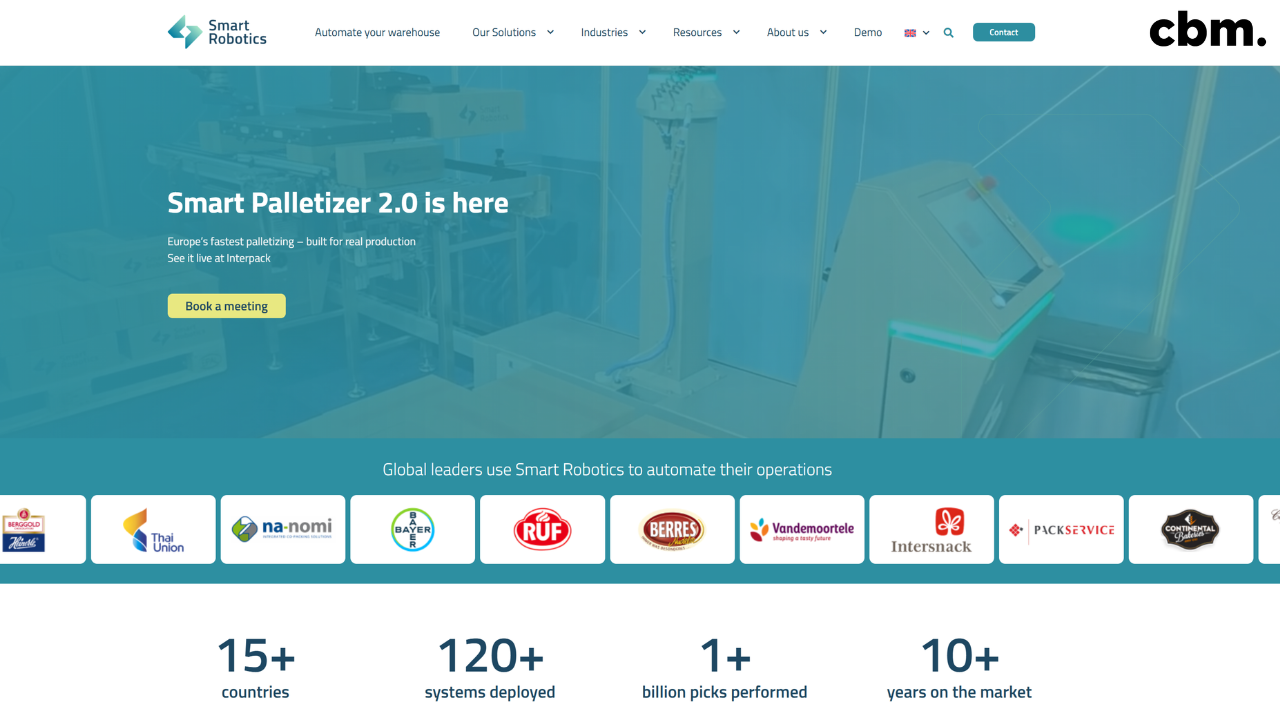
The company says it has already deployed more than 120 systems across 15 countries and five industries, completing more than one billion successful robotic picks in live production environments. This operational history is central to Smart Robotics’ positioning, because every robotic pick generates data that can be used to improve the company’s AI systems over time.
The €10 million Series A round is intended to help Smart Robotics scale its technology across Europe. According to funding reports, the company will use the fresh capital to strengthen commercial operations, expand into additional European markets, and continue advancing its AI-driven pick-and-place platform.
This is particularly relevant for the e-commerce and logistics sectors, where automation adoption is increasingly tied to speed, reliability, and cost control. Warehouses serving online retail must manage fast order cycles, volatile demand, seasonal peaks, and returns flows. In that context, robotic picking can help operators reduce dependency on manual labor while improving consistency in repetitive processes.
Smart Robotics’ model also reflects a broader shift in warehouse automation. Instead of offering only standard hardware, the company combines robotic cells, software, and AI-based control systems. Its solutions are designed for tasks such as item picking, palletizing, and depalletizing, making automation more adaptable to real-world logistics environments.
For e-commerce businesses, warehouse performance directly impacts the customer experience. Fast delivery promises, accurate order preparation, and reliable fulfillment are now essential parts of online retail competitiveness. As a result, the warehouse is no longer just a back-end operational space; it has become a strategic layer of the e-commerce value chain.
Robotic picking addresses a key bottleneck. In many fulfillment centers, picking remains one of the most labor-intensive and difficult-to-scale tasks. Unlike pallet movement or conveyor-based sorting, item picking often requires flexibility, perception, and decision-making. A robot must understand what it is looking at, decide how to grip the item, and place it correctly without damaging the product or disrupting the flow.
Smart Robotics claims its systems can achieve up to 1,000 picks per hour and maintain 99.5 percent uptime. Those figures, if consistently achieved in live warehouse conditions, help explain why investors are paying closer attention to AI-powered intralogistics automation.
The most important part of the Smart Robotics story is not only the robot arm, but the intelligence layer behind it. The company’s AI-based software is designed to help robots operate in environments where product variety and workflow conditions change constantly.
That matters because e-commerce warehouses rarely handle a narrow and predictable set of items. A single fulfillment operation may process thousands of SKUs, from boxes and bags to fragile or irregularly shaped goods. Traditional automation can struggle in these conditions because it is often built around repeatability. AI-driven robotics aims to add adaptability.
Smart Robotics’ reported milestone of more than one billion successful real-world picks gives the company a potentially valuable operational dataset. In practical terms, this means the company can use data from deployed systems to improve object recognition, gripping strategies, and robotic decision-making.
The participation of Rotterdamse Havendraken, Innovation Industries, and Ernij Next shows continued investor interest in companies that apply AI to physical operations, not only software-based workflows. In logistics, this trend is often described through concepts such as embodied AI, physical AI, or intelligent automation.
The difference is important. While many AI tools focus on digital tasks, warehouse robotics must perform reliably in the physical world. That means dealing with uncertainty, movement, object variation, safety requirements, and integration with existing warehouse systems.
Smart Robotics’ funding round, therefore, fits into a larger investment pattern: capital is flowing into technologies that make supply chains more resilient, automated, and data-driven. For cross-border e-commerce, this is especially relevant because international growth increases operational complexity. More markets, more SKUs, more delivery promises, and more returns all add pressure to fulfillment networks.
Smart Robotics gets €10M funding at a time when European logistics companies are looking for ways to increase capacity without simply adding more labor. In many markets, recruiting warehouse workers remains difficult, especially for physically repetitive roles. At the same time, e-commerce customers expect faster deliveries, better tracking, and fewer errors.
Automation can help address these challenges, but only when it is flexible enough to operate in real warehouse conditions. This is where Smart Robotics is trying to differentiate itself. Its approach combines AI software, operational data, and robotic hardware to automate tasks that have traditionally been hard to mechanize.
The company’s expansion could also support a more competitive European logistics technology ecosystem. While much of the robotics investment conversation is often dominated by US and Asian players, Smart Robotics is positioning itself as a European specialist in AI-driven intralogistics.
The Series A round gives Smart Robotics additional resources to scale its platform and expand its reach, but the company will still operate in a competitive and technically demanding market. Warehouse automation buyers typically need proof that systems can deliver reliable returns on investment, integrate with existing workflows, and handle the operational complexity of live fulfillment environments.
That makes Smart Robotics’ existing deployment base an important part of its commercial argument. The company reports more than 120 deployed systems, more than 1 billion completed picks and operations, and operations across 15 countries. These figures suggest that the company is not only developing experimental robotics but also deploying systems in production environments.
For logistics operators and e-commerce businesses, the key question will be whether AI-driven robotic picking can scale across different warehouse formats, product categories, and market conditions. If it can, robotic picking could become a central part of the next-generation fulfillment infrastructure.
Smart Robotics gets €10M funding not simply because warehouse robotics is a promising technology category, but because the operational demands of e-commerce are changing. Fulfillment networks must now support faster order cycles, higher product variety, cross-border expansion, and tighter cost control.
In that environment, automation is becoming a competitive requirement. Companies that can combine robotics, AI, and real-world warehouse data are well-positioned to benefit from this shift.
Smart Robotics’ latest funding round shows that investors see AI-powered intralogistics as a key growth area in Europe. For e-commerce and logistics companies, the message is clear: the future of fulfillment will increasingly depend on intelligent automation capable of operating in complex, high-volume, and fast-changing warehouse environments.




By continuing to use the site, you agree to the use of cookies. more information
The cookie settings on this website are set to "allow cookies" to give you the best browsing experience possible. If you continue to use this website without changing your cookie settings or you click "Accept" below then you are consenting to this.