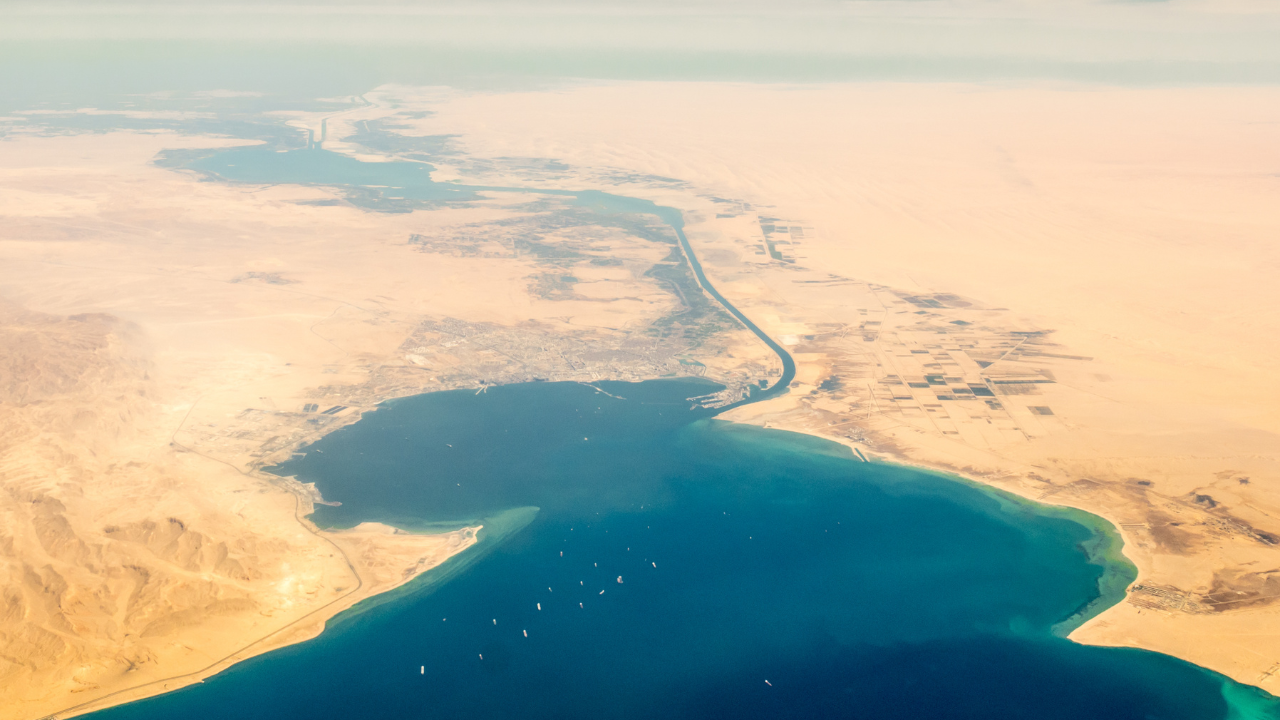
Global logistic companies are on edge as a new political and military crisis could cause a blockade in the Red Sea and the Suez Canal, and this, in turn, could lead to a massive logistic disaster, as goods and commodities are forced to travel via the old route of the Horn of Africa and keep going, surrounding the continent and wasting precious time and fuel.
The Suez Canal represents a crucial route for trade between Europe and Asia, linking the Mediterranean Sea with the Red Sea. Now, however, cargo ships could stop passing through this area, and, as a result, worldwide logistics would be heavily affected.
Yemen, one of the countries that controls access to the Red Sea, has been struggling with a civil war since 2014. Now the Ucranian war has increased the Yemeni civil war to a boiling point, as the country lost access to the grain and food it used to buy from Ucraine.
Thus, the fighting in the Red Sea that borders Yemen began to increase in both intensity and frequency in November and has now reached a point where Houthi militias, allegedly backed by Iran, attacked the merchant ship Galaxy Leader (linked to Israel).
Subsequently, the organization communicated that any Israeli ship passing through the Red Sea would be attacked, and, since November, any ship passing through this area, from whatever source, has been attacked with missiles or drones, and they have even tried to take control of some.
Among the shipping lines that have decided to abandon the route to avoid further incidents are:
Hapag-Lloyd AG, one of Germany's leading container carriers, has decided to stop its Red Sea routes after suffering numerous attacks by the Red Sea militia.
Swiss giant MSC has been another to suffer missile attacks on one of its cargo ships. They will stop routes through that area until the situation is calmer.
Maersk, a leading Danish shipping company, has also announced its intention to change routes after suffering an attack on one of its shipping containers.
The French shipping operator CMA CGM has also decided to suspend navigation in this sea area for the time being.
The Suez Canal stretches 193 kilometers and is responsible for approximately 12% to 15% of global trade. This situation has generated considerable revenues for several countries in the region that benefit from this commercial activity.
In addition, we must remember that the Suez Canal is one of the main routes for European companies' supply chains. The decision to temporarily suspend this route by four shipping lines will halve the daily traffic of around 50 ships.
The shipping lines are going to make a change in their logistics routes to avoid passing through the Red Sea.
For example, one route took an average of 25.5 days to ship goods from Taiwan to the Netherlands, and, according to the BBC, taking alternative routes would take ships approximately 34 days. The increase in working days and fuel costs will lead to higher prices for many consumer goods in Europe.
If the Suez Canal and the Red Sea routes are not available or secure, prices will surely skyrocket in Europe as many goods become scarce and fuel - and any oil derivatives - also disappear from the European markets.




By continuing to use the site, you agree to the use of cookies. more information
The cookie settings on this website are set to "allow cookies" to give you the best browsing experience possible. If you continue to use this website without changing your cookie settings or you click "Accept" below then you are consenting to this.