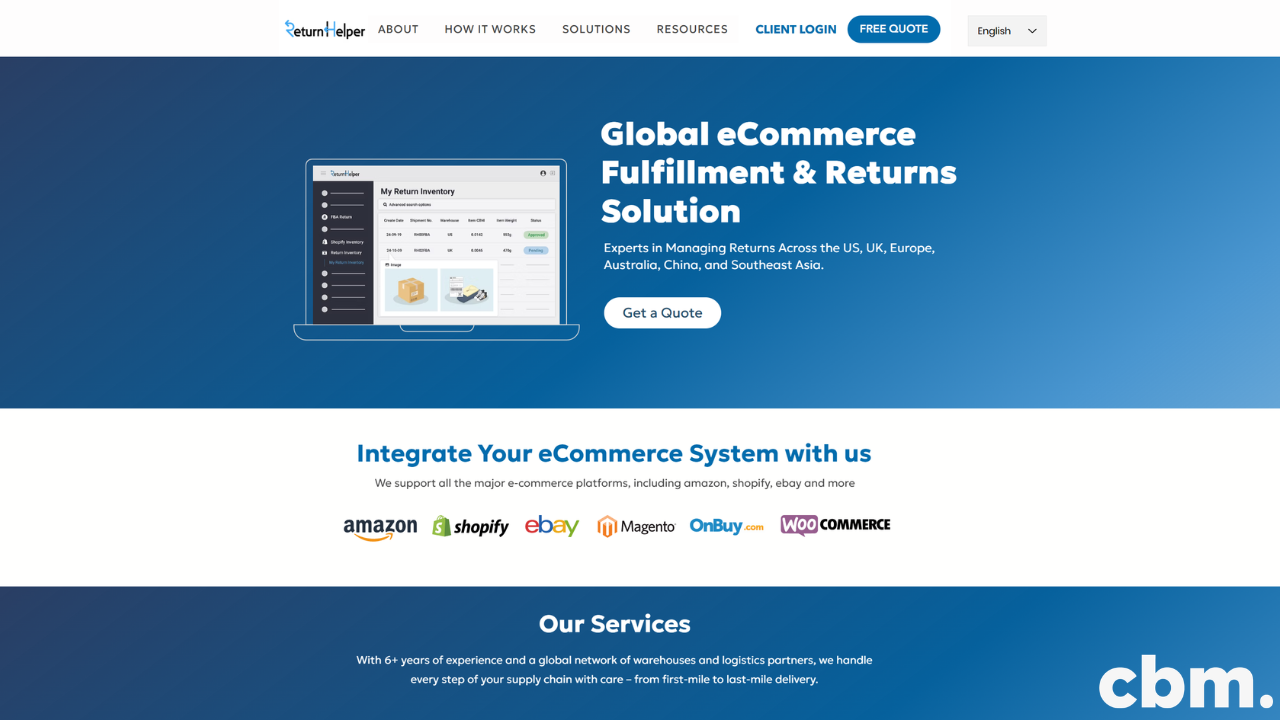
Return Helper has raised US$4 million in Series A funding to expand its AI-powered cross-border e-commerce returns infrastructure. The round highlights the growing importance of reverse logistics in international online retail, where returns are no longer seen as a simple operational cost but as a strategic part of profitability, customer experience, and inventory recovery.
The funding round brought together a mix of financial and strategic investors, including Cathay Venture, MLC Ventures, Jun Yue Investment, Pegatron Venture Capital, and returning investor Colopl Next. MLC Ventures, the corporate venture arm of Mitsubishi Logistics Corporation, is especially relevant to the company’s next phase, as Return Helper looks to deepen its logistics capabilities and expand further across Japan and other international markets.
Founded as a technology-first provider of global cross-border e-commerce returns solutions, Return Helper supports merchants selling through major platforms such as Shopify, Amazon, TikTok and eBay. The company operates more than 20 overseas warehouses, works with over 30 carriers and logistics partners, and has offices across Asia, including China, Hong Kong, Japan, Singapore, and Taiwan.
The new capital will support three areas: international expansion, AI development and recommerce. Together, these priorities point to a larger shift in e-commerce logistics. As cross-border selling becomes more common, merchants increasingly need infrastructure that can manage not only outbound fulfillment but also returns, resale, recycling, refurbishment, and local recovery of returned inventory.
Returns are among the most complex aspects of e-commerce. In domestic retail, they already pose challenges for customer service, warehouse operations, refunds, fraud prevention, stock visibility, and resale. In cross-border e-commerce, those problems multiply.
International returns can involve customs declarations, local regulations, fragmented carrier networks, long transit times, high shipping costs, inspection delays, and uncertain resale options. A returned product may be worth less than the cost of shipping it back to the original warehouse. For many merchants, especially those selling low-margin products internationally, the financial logic of cross-border returns can quickly break down.
That is the problem Return Helper is trying to solve. Instead of treating international returns as a linear process in which products are simply sent back to the point of origin, the company focuses on local handling and asset recovery. Returned items can be inspected, processed, resold, recycled, or redirected through local networks, helping merchants recover more value and reduce waste.
This approach is increasingly important in Europe, where e-commerce growth, sustainability expectations and regulatory pressure are all changing how retailers think about returns. Customers expect easy return options, but merchants need to control costs. Regulators and consumers are also paying more attention to waste, product destruction, and the environmental footprint of online retail. For cross-border sellers, that creates demand for smarter returns infrastructure.
Return Helper’s funding round also reflects a wider trend: the use of AI in operational e-commerce workflows. While much of the public conversation around AI in retail has focused on product recommendations, chatbots and content generation, the next wave of adoption is moving deeper into logistics and back-office operations.
Returns management is well-suited to AI because it involves repetitive yet decision-heavy processes. Every return can require a judgment: should the item be accepted, refunded, exchanged, repaired, resold, recycled, or routed to a specific warehouse? Should the merchant pay for return shipping? Is the product still suitable for resale? Is there a fraud risk? Is local recovery more profitable than international shipment?
AI agents and automated decision systems can help merchants process these decisions faster and more consistently. In Return Helper’s case, the company has stated that part of the Series A funding will go toward developing AI agents to automate return decisions. This suggests that the company is not only building logistics infrastructure but also decision intelligence for cross-border reverse logistics.
For merchants, the value is clear. Faster returns processing can improve customer satisfaction. Better routing decisions can reduce costs. Automated inspection and resale workflows can increase recovery rates. More accurate data can help teams understand why products are being returned and how to reduce future return volumes.
One of the most interesting aspects of Return Helper’s positioning is its emphasis on recommerce. The company is not only helping merchants manage returns; it is helping them turn returned goods back into recoverable value.
Recommerce refers to the resale, refurbishment, or redistribution of returned, used, or excess inventory. In the context of cross-border e-commerce, recommerce can be especially valuable because returning products to the original market is often inefficient. A product sold into Europe from Asia, for example, may be too expensive to ship back. Local resale or recycling may be the better financial and environmental option.
This matters because e-commerce returns have traditionally been treated as a margin drain. A customer returns a product, the merchant loses the sale, shipping costs increase, warehouse work increases and the product may lose resale value. If returns can instead be converted into local resale opportunities, the economics change.
Return Helper’s model fits into this shift. By combining overseas warehouses, carrier partnerships, returns software, warehouse management systems and recommerce operations, the company aims to help merchants recover value from products that might otherwise become stranded, discounted or written off.
For European e-commerce, this is particularly relevant. As marketplaces, direct-to-consumer brands and cross-border sellers compete on convenience, return policies remain a major part of the customer experience. However, generous return policies are only sustainable if the operational model behind them is efficient. Recommerce gives retailers a way to balance customer expectations with profitability and sustainability.
Although Return Helper has strong roots in Asia, Europe appears to be an increasingly important part of its growth story. The company has reported strong momentum in Europe, including significant revenue growth and a growing base of European merchant partners.
This is not surprising. Europe is one of the world’s most attractive e-commerce regions, but it is also highly fragmented. Different languages, consumer expectations, carrier networks, tax rules, and market structures make cross-border operations complex. For merchants selling into multiple European countries, managing returns through a single centralized workflow can be difficult.
At the same time, European consumers are accustomed to strong consumer protection standards and convenient post-purchase experiences. A poor returns experience can damage trust and reduce repeat purchases. For international sellers, especially those entering Europe from Asia or other regions, returns infrastructure can become a competitive barrier.
Return Helper’s European opportunity lies in helping those sellers localize the post-purchase experience. Instead of forcing every returned product through a lengthy international reverse-logistics chain, merchants can use local processing, local resale, and more flexible warehouse routing. That can reduce cost, shorten processing times, and improve customer satisfaction.
The investor mix in Return Helper’s Series A is also significant. This is not only a software funding story. The participation of logistics-linked and corporate investors suggests that cross-border returns are becoming a priority area for the broader supply chain industry.
MLC Ventures, the corporate venture capital arm of Mitsubishi Logistics Corporation, brings a clear logistics angle to the round. Mitsubishi Logistics has deep experience in warehousing, transportation and supply chain infrastructure, which could support Return Helper’s expansion in Japan and beyond. Pegatron Venture Capital also adds a strategic dimension, given Pegatron’s wider role in technology manufacturing and supply chain ecosystems.
This type of investor base is important because returns management requires more than a software dashboard. It depends on physical infrastructure, carrier relationships, warehouse processes, local market knowledge, and operational execution. By combining software and logistics capabilities, Return Helper is positioning itself in a category where pure SaaS tools may not be enough.
For e-commerce merchants, the Return Helper funding round is part of a broader signal: returns are becoming a core part of international growth strategy. Brands that expand across borders without a clear returns model may face rising costs, slower refunds, poor customer reviews, and inventory losses.
A stronger returns strategy can help merchants in several ways. It can reduce unnecessary international shipping, improve refund speed, support exchanges, recover more value from returned items, and provide better data on product quality, sizing, customer expectations, and fraud patterns.
For marketplace sellers, the pressure is even higher. Platforms such as Amazon, TikTok Shop, eBay, and Shopify-based storefronts all create different operational requirements. Sellers that operate across multiple channels need systems that can centralize returns and connect the process with warehouses, carriers and resale channels.
Return Helper’s focus on multi-platform support is therefore important. By serving merchants who sell through Shopify, Amazon, TikTok, eBay, and other channels, the company addresses the reality of modern e-commerce: sellers rarely operate through a single storefront.
For years, the e-commerce logistics conversation focused heavily on fulfillment speed. Retailers competed on faster delivery, better tracking, distributed warehouses, and last-mile convenience. That remains important, but the next competitive layer is reverse logistics.
As online sales volumes grow, return volumes grow with them. In categories such as fashion, footwear, electronics, and home goods, returns can represent a major operational burden. Cross-border returns add even more friction. This is why investors are paying closer attention to companies that can deliver returns more cheaply, smarter, and more profitably.
The Return Helper round shows that reverse logistics is becoming part of the core e-commerce technology stack. Returns management, warehouse software, AI decision-making, carrier orchestration, and recommerce are no longer separate functions. They are converging into a single post-purchase infrastructure layer.
This is also where AI can create measurable value. Unlike more experimental AI use cases, returns management has direct operational metrics: processing time, cost per return, resale recovery rate, refund time, customer satisfaction, fraud reduction, and inventory recovery. That makes it easier for merchants to connect technology investment with business outcomes.
The opportunity is clear, but the challenge is also significant. Cross-border returns are operationally complex, and scaling them across markets requires consistency, local knowledge, and strong execution. Return Helper will need to prove that its model can work across different regions, product categories, merchant sizes, and regulatory environments.
Its ability to integrate AI into real logistics workflows will also be important. AI-powered returns decisions can create value, but only if they are supported by accurate data, reliable warehouse processes and clear merchant rules. Automation in returns cannot be generic; it must account for product condition, category, value, customer history, regional regulation, and resale potential.
If Return Helper can combine AI decision-making with strong physical infrastructure, it could become an important player in the next phase of cross-border e-commerce logistics.
Return Helper’s US$4 million Series A funding round reflects a larger shift in global e-commerce. Cross-border returns are no longer a secondary operational issue. They are becoming a strategic battleground for profitability, customer experience, and sustainability.
By focusing on AI-powered returns management, recommerce and international logistics infrastructure, Return Helper is addressing one of the hardest problems in online retail: how to make global selling work after the sale has already happened.
For European merchants and international sellers entering Europe, the message is clear. Growth is not only about acquiring customers and shipping products across borders. It is also about building the infrastructure to manage what comes back. As return volumes rise and margins remain under pressure, companies that can turn reverse logistics into recoverable value may become increasingly important to the future of cross-border e-commerce.




By continuing to use the site, you agree to the use of cookies. more information
The cookie settings on this website are set to "allow cookies" to give you the best browsing experience possible. If you continue to use this website without changing your cookie settings or you click "Accept" below then you are consenting to this.