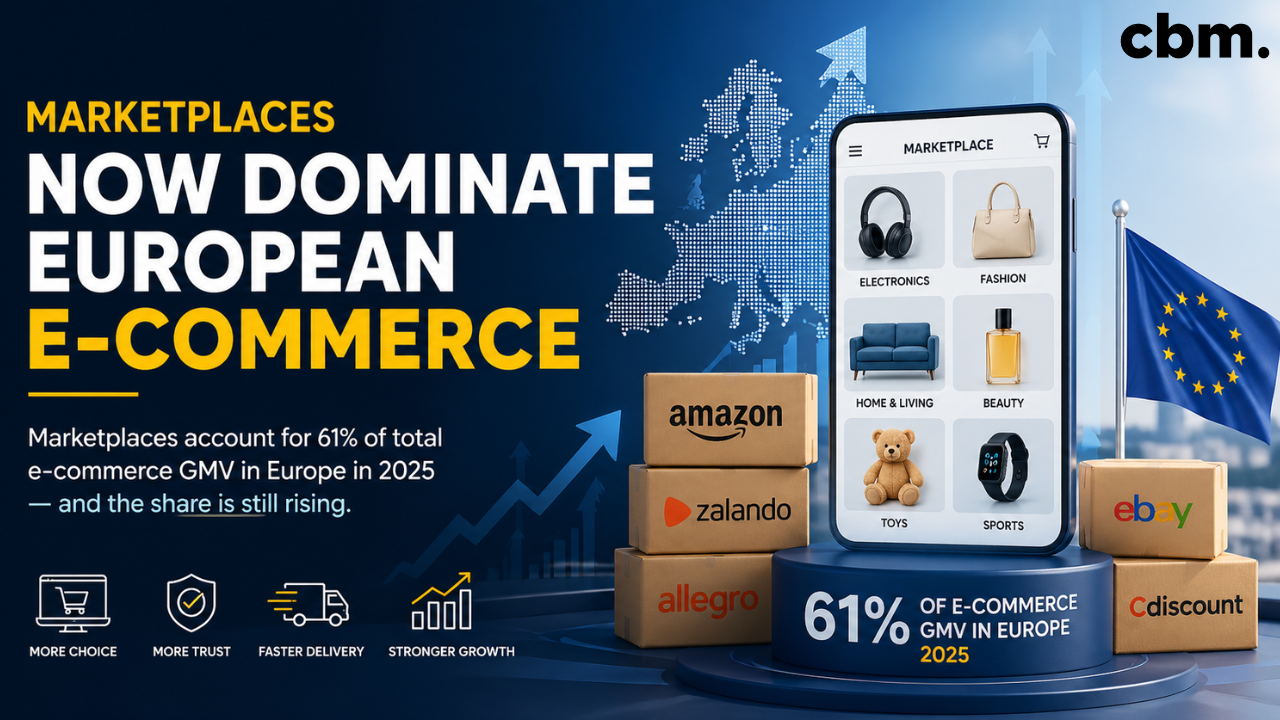
European e-commerce has entered a new era. The traditional model of brands selling primarily through their own online stores is being challenged by the rapid rise of digital marketplaces. In 2025, marketplaces accounted for 60.8% of total e-commerce gross merchandise value (GMV) in Europe, a sharp increase from 56.2% in 2023. That means most online sales in Europe now happen through multi-vendor platforms rather than standalone webshops.
This shift is more than a statistic. It signals a structural transformation in how consumers shop, how brands grow, and how competition works across the European digital economy.
Several forces are accelerating marketplace dominance across the region.
Modern shoppers increasingly prefer destinations where they can compare brands, prices, delivery options, and reviews in one place. Instead of visiting five different websites, they can search once on a marketplace and complete the purchase immediately.
That convenience has made marketplaces the default starting point for many buying journeys, especially in categories such as electronics, fashion, home goods, and beauty.
Consumers often trust large platforms more than unknown independent stores. Familiar checkout systems, clear return policies, fast shipping, and visible customer reviews reduce friction and increase conversion rates.
For newer or smaller merchants, being present on a trusted marketplace can shorten the path to first purchase.
Leading marketplaces have invested heavily in warehousing, fulfillment, and delivery infrastructure. Faster shipping and simplified returns have become standard expectations, raising the bar for independent retailers.
Many merchants now choose marketplaces not only for traffic, but also for access to operational capabilities they would struggle to build alone.
The European marketplace landscape includes both global giants and strong regional champions.
Amazon remains the largest force in European e-commerce, holding leading positions in key markets such as Germany and the United Kingdom. Its scale, Prime ecosystem, and fulfillment network give it major advantages.
Zalando has built a powerful position in fashion and lifestyle, expanding across multiple European countries.
Allegro dominates in Poland and plays an important role in Central and Eastern Europe.
eBay continues to attract buyers and sellers in multiple categories, especially refurbished goods, collectibles, and cross-border commerce.
These platforms show that marketplace success in Europe is not limited to one business model or geography.
Marketplace dominance creates both opportunity and risk.
Marketplaces can provide instant access to millions of active buyers. For many brands, this can accelerate market entry in new countries without the need to build local awareness from scratch.
This is especially relevant in Europe, where language, logistics, tax, and consumer preferences differ significantly by country.
The same platforms that offer reach also intensify competition. Products are displayed next to rivals, price comparison is immediate, and customer loyalty can shift quickly.
Merchants need stronger product content, sharper pricing strategies, and differentiated service to stand out.
Marketplace commissions, advertising costs, and promotional requirements can reduce profitability. Sellers may gain revenue while sacrificing margin if they do not manage channel economics carefully.
Success on marketplaces increasingly requires professional performance management, not just listing products.
The rise of marketplaces does not mean owned webshops are disappearing. Instead, their role is changing.
Direct-to-consumer websites remain valuable for:
Many successful retailers now operate hybrid strategies: marketplaces for reach and acquisition, owned channels for retention and lifetime value.
This approach balances scale with control.
Marketplace dominance is even stronger in cross-border commerce. Europe’s fragmented geography makes it difficult for individual merchants to scale internationally on their own. Marketplaces solve many of those barriers through localized storefronts, built-in payments, and established logistics networks.
Cross-border e-commerce in Europe continues to grow rapidly, reinforcing the value of marketplace ecosystems for international expansion.
The European e-commerce market share is likely to continue rising, though not without challenges. Regulation, platform fees, competition policy, sustainability expectations, and changing consumer behavior will all shape the next phase.
Still, the direction is clear: marketplaces are no longer one channel among many. They are now the center of gravity in European online retail.
For brands, the key question is no longer whether to sell on marketplaces. It is how to build a profitable strategy within an ecosystem that increasingly defines the market.
European e-commerce has crossed an important threshold. With more than 60% of online GMV now flowing through marketplaces, the region has moved decisively toward platform-led commerce. Brands that adapt early, optimize operations, and balance marketplace reach with direct customer relationships will be best positioned for long-term growth.



By continuing to use the site, you agree to the use of cookies. more information
The cookie settings on this website are set to "allow cookies" to give you the best browsing experience possible. If you continue to use this website without changing your cookie settings or you click "Accept" below then you are consenting to this.