By Timon van den Berg, Director of Fulfillment at Salesupply - For many Non-EU ecommerce brands, the latest DHL Globalmail suspension will feel uncomfortably familiar.
Five years after Brexit forced retailers to relearn the commercial impact of customs borders, another rule change is exposing the same weak spot: European ecommerce operations built on fragile cross-border parcel flows.
The market is talking about the €3 duty. It should be talking about the border. On paper, the EU’s new temporary duty on low-value imports looks like a cost issue. It is not. A €3 duty is visible. Operational fragility is not, until something breaks.
That is why the DHL suspension matters. It shows that the risk is not simply that shipping becomes more expensive. The risk is that a route retailers depend on can suddenly become unreliable, restricted or unavailable when the carrier model, customs requirements and duty-payment process no longer fit together.
That is a much bigger problem than a surcharge.
Once that happens, customs stops being a compliance process in the background. It becomes part of the customer experience.
A delivery promise changes. A parcel gets delayed. Tracking goes quiet. A return becomes complicated. Customer service gets flooded with questions nobody can answer cleanly. The margin on a small order disappears. The customer does not blame the customs process. The customer blames the retailer.
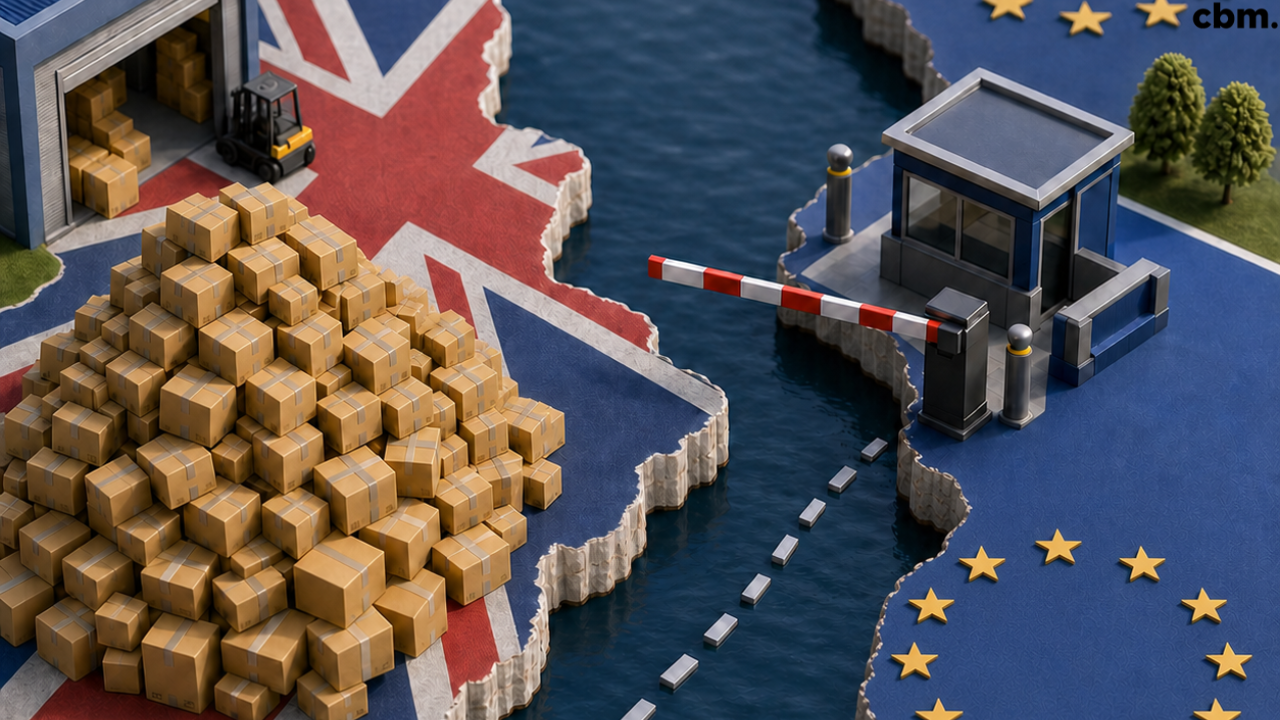
This is the pattern retailers should recognize. The border is not just a legal line on a map. It is a delivery delay, a refused parcel, a surprise fee, a damaged review and a lost repeat customer. What looks like an administrative change becomes a commercial problem.
It is happening again.
Not because this is Brexit 2.0. It is not. Brexit was a political border event. The EU low-value import duty is a customs and ecommerce reform.
But the mistake is the same: assuming that European growth can be built indefinitely on fulfilment models that only work when the border stays quiet.
That assumption is becoming harder to defend.
ILG’s UK Retail Growth Report 2026, based on a survey of 328 senior leaders across UK retail brands, found that 54% cite rising business costs as their biggest barrier to growth, while 53% point to fulfilment and delivery costs. Only 10% cited customer acquisition costs.
That is not an operational footnote. It is the new growth equation.
For years, ecommerce strategy has been dominated by the front end: traffic, conversion, paid media, marketplaces, social commerce and customer acquisition. Retailers became very good at creating demand. The uncomfortable shift is that demand is no longer the hardest part to generate. It is the hardest part to serve profitably.
The order may be won at checkout, but it is defended in the warehouse, at the border, with the carrier and through the returns process. That is where margin is protected or lost. That is where customer trust is either confirmed or broken.
Fulfilment is no longer what happens after growth. Fulfilment is deciding how much growth is possible.
That is the real context for the DHL suspension and the €3 duty. They are not creating the fulfilment problem. They are exposing it.
Consider the brand selling from a single UK warehouse into France, Germany and the Netherlands. The commercial logic looks clean. One stock pool. One fulfilment operation. One carrier setup. A European customer base served without the cost of European inventory.
It works until the border becomes visible.
Suddenly the cheapest route is no longer available. Duties need to be handled differently. Product data needs to be more accurate. Delivery promises become harder to keep. Returns cross the border twice. Customer service has to explain delays created by processes the customer never agreed to care about.
The business has not lost demand. It has lost control.
The strategic question is not “who absorbs the €3?”
The strategic question is: where is your inventory?
For a long time, too many brands treated inventory location as an operational detail. It was a warehouse decision, a cost decision, sometimes even a convenience decision.
That view is outdated.
Inventory location now determines delivery speed, customs exposure, returns complexity, carrier resilience, margin protection and customer experience. It determines whether growth in a market is scalable or merely possible.
For brands with serious European ambitions, cross-border shipping is no longer a strategy. It is a compromise that needs to be justified.
That does not mean every order must be fulfilled domestically. It means brands need to stop confusing market access with market readiness. Being able to sell into Europe is not the same as being operationally equipped to serve Europe.
The brands that learned from Brexit did not just switch carriers. They changed their operating model. They moved stock closer to demand. They improved customs data. They adopted Delivered Duty Paid models. They localized returns. They treated fulfilment as part of the customer proposition, not just the machinery behind it.
The real mistake is not underestimating a surcharge. It is building European ecommerce growth on the assumption that the border will stay invisible.




By continuing to use the site, you agree to the use of cookies. more information
The cookie settings on this website are set to "allow cookies" to give you the best browsing experience possible. If you continue to use this website without changing your cookie settings or you click "Accept" below then you are consenting to this.