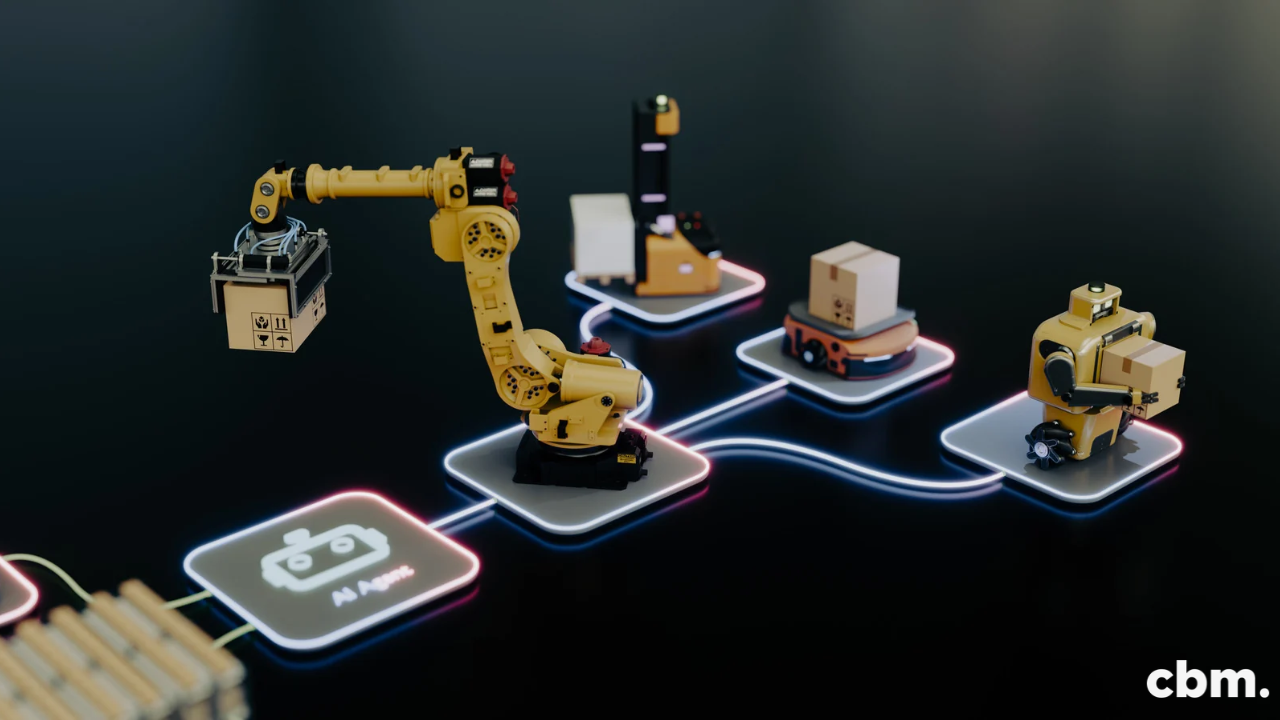
100,000 picks per day: that is the throughput Zalando reported from its robotics pilot before announcing plans to expand its partnership with Nomagic to up to 50 AI-powered robotic systems across its European fulfilment network.
Announced on 19 March 2026, the expansion gives European e-commerce a concrete example of AI moving from testing into a broader operational rollout. The focus is practical: recognising products, gripping them correctly and feeding them into the systems that process customer orders.
The 100,000 daily picks describe the pilot overall, rather than the output of each robot. Likewise, the 50 systems represent the planned rollout, rather than a confirmed installed total.
Zalando said the successful deployment of its first 10 units prompted the decision to scale its partnership with Nomagic. The robots handle item-level picking, scanning and induction into automated pocket sorters.
At the time of the announcement, initial systems were already operating in Lahr and Moenchengladbach in Germany, and Verona in Italy. Further deployment was planned for logistics hubs in the Netherlands, Sweden, France and Germany, including the new Giessen fulfilment centre.
For a retailer handling changing fashion collections across multiple markets, the challenge extends beyond repeating the same movement. Products differ in shape, material and orientation. The technology must adjust to that variety while fitting into an existing fulfilment operation.
One application illustrates why AI matters here: picking up shoeboxes without losing their lids.
Conventional robotic arms can struggle with loose lids. Zalando’s system combines computer vision with specialised grippers that secure the box from two sides. The software recognises the product and its orientation, allowing the robot to adjust its grip and picking technique.
The wider robotic systems also recognise different shapes and materials. This ability to adapt is central to the case: AI helps equipment handle a changing assortment of products, rather than relying entirely on identical items arriving in identical positions.
Zalando’s announcement provides two useful signals: reported throughput from a pilot and a decision to extend deployment across a multinational network.
It does not provide a percentage reduction in fulfilment costs, a measured improvement in picking accuracy or a payback period. Those outcomes cannot be inferred from the number of picks alone.
For cross-border retailers, the case offers a practical way to assess warehouse AI: identify a specific handling problem, test the equipment against the actual product mix and measure how reliably it works before expanding deployment.
The strongest lesson from Zalando is the progression from a defined task to a wider rollout. Its first 10 units provided the operational basis for plans covering up to 50 systems across Europe.
For e-commerce businesses, that makes warehouse AI a tangible investment question: which repetitive product-handling tasks can the technology perform reliably, and what measurable benefit would justify expanding it?
Zalando’s case brings that discussion down to the warehouse floor—with 100,000 daily pilot picks as the starting point.

By continuing to use the site, you agree to the use of cookies. more information
The cookie settings on this website are set to "allow cookies" to give you the best browsing experience possible. If you continue to use this website without changing your cookie settings or you click "Accept" below then you are consenting to this.