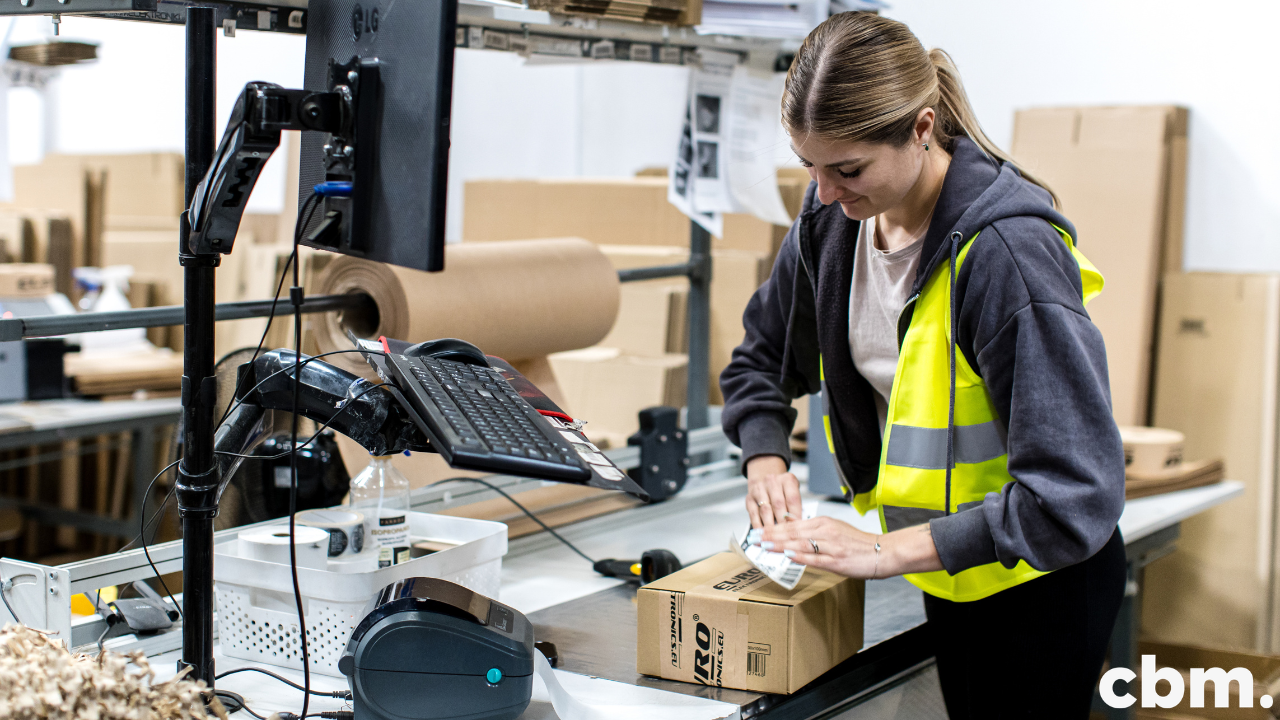
For many European small and medium-sized enterprises, international expansion has long been attractive but difficult. The European single market gives businesses access to a large consumer base, yet selling across borders still involves logistics, taxation, compliance, customer service, language barriers, and country-specific rules.
This complexity has often made cross-border e-commerce feel like a growth path reserved for larger retailers with dedicated export teams. For smaller merchants, even expanding into a neighboring country can require operational setup before demand has been properly tested.
Marketplaces such as Temu are changing this dynamic. Instead of asking SMEs to build export infrastructure market by market, platforms are increasingly acting as cross-border growth channels. They provide access to consumer traffic, seller tools, logistics partnerships, and operational support that can help smaller businesses enter new markets faster.
The result is a shift in how European SMEs approach internationalization. Expansion no longer has to begin with local entities, separate websites or independent delivery networks in every country. It can also begin through a marketplace ecosystem that already connects sellers, consumers, and service providers across several markets.
Europe is often described as a single market, but many SMEs still experience it as fragmented. Selling into another country can involve different tax processes, packaging rules, product requirements, consumer expectations, and delivery standards.
A 2025 European Commission survey confirmed that SMEs continue to face significant barriers when scaling across the single market. Among the most cited challenges were divergent business environments, unclear rules, and taxation-related issues.
For small businesses, these barriers are especially difficult because many cross-border costs are hard to absorb. Larger retailers can spread compliance, logistics, and administrative costs across high sales volumes. Smaller merchants often cannot. Before they know whether a new market will generate demand, they may already need to invest in translations, tax setup, delivery processes, returns management, and customer service.
That creates a practical problem: many SMEs do not avoid cross-border growth because there is no opportunity, but because the operational bridge is too complex or expensive to build alone.
Marketplaces were once seen mainly as sales channels. Increasingly, they are becoming infrastructure providers.
For an SME, a marketplace can offer visibility, operational reach, and market access. Instead of launching a standalone webstore in each country, the seller can list products on a platform that already has consumer traffic. Instead of building a delivery network alone, the seller can connect to logistics options supported by the platform. Instead of navigating every market from zero, the seller may benefit from seller tools, guidance, and service partners.
This does not remove every responsibility from the merchant. Sellers still need to manage pricing, product compliance, stock availability, customer expectations, and marketplace rules. However, it can reduce enough friction to make international testing more realistic.
For SMEs, this changes the logic of cross-border expansion. Selling abroad becomes less of a major strategic leap and more of an incremental growth path. A business can test demand in a neighboring market, measure performance, adjust inventory, and expand further if results are strong.
Temu’s Local Seller Program is part of this wider shift. Launched in 2024, the program allows eligible local businesses to sell through local warehousing and delivery. It was originally designed to support local-to-local selling, but it has increasingly become relevant for merchants looking to reach consumers beyond their domestic market.
For SMEs, the appeal is clear. Temu offers access to a large marketplace audience without requiring sellers to rebuild their entire e-commerce operations in each country. Eligible merchants can use the platform to test demand across several destinations, rather than building separate market-entry plans one country at a time.
This can turn cross-border expansion from a slow, sequential process into a faster marketplace-led rollout. For small and mid-sized businesses, that speed can make international growth less risky and more measurable.
The experience of Kremtik, a Spanish sweets business based in Badajoz, shows how this model can work for a small merchant.
Founded by Cristian García, Kremtik sells gummies, novelty snacks and nostalgic sweets online. The company had already developed strong domestic online demand in Spain, but international expansion remained difficult. Selling abroad meant dealing with logistics, tax questions and market-specific requirements.
After joining Temu, Kremtik began selling in Portugal. For a small team, this represented a meaningful step: the company could reach international customers without first having to build a complete export operation independently.
The key point is not only that Kremtik sold abroad. It is so that the company could test demand quickly. For many SMEs, speed reduces uncertainty. A business can learn whether consumers in another country respond to its products before committing to a heavier investment.
Kremtik’s case also shows the value of marketplace visibility. Small businesses may have strong products but limited reach outside their home market. Marketplaces can help solve this discovery problem by placing local merchants in front of consumers who are already shopping.
A similar pattern can be seen with Euroelectronics, a Polish electronics distributor.
After joining Temu in early 2025, Euroelectronics expanded into 18 European markets within weeks, including countries where it had not previously operated. For a company with a large product catalog and established warehouse operations, the platform offered a way to enter several markets simultaneously rather than building a separate launch plan for each.
This shows that marketplace-led expansion is not only useful for very small businesses. It can also help more established distributors accelerate international sales. Even companies with inventory, warehouse capacity, and operational experience may face delays when entering new markets. Logistics negotiations, systems integration, and country-specific processes can take months.
By using Temu’s marketplace infrastructure, Euroelectronics was able to scale more quickly. The company has also indicated plans to expand warehouse capacity and improve inventory integration, showing how marketplace growth can influence broader operational planning.
Cross-border e-commerce depends heavily on logistics. Customers may discover products online, but the delivery experience determines whether the purchase feels reliable.
Temu says it works with more than 150 EU delivery providers and 10 national postal services. This should be understood as a company-provided figure, but it reflects the broader strategy of building delivery capacity that can reduce friction for sellers and buyers. Partnerships with logistics operators such as DHL and postal networks in Europe also show how platforms are investing in local and regional fulfillment models.
For SMEs, this type of logistics support matters. Building cross-border delivery independently can be difficult because customer expectations vary by country. Consumers expect affordable shipping, tracking, reasonable delivery times, and simple returns. Marketplaces can reduce some of that complexity by aggregating demand and connecting sellers with established delivery options.
Compliance is equally important. European sellers must deal with VAT, product safety, packaging rules, environmental obligations, and Extended Producer Responsibility requirements. These obligations can differ by market and product category.
Marketplaces can support sellers with tools, guidance and operational processes, but they do not remove the seller’s responsibility to comply with applicable laws. For SMEs, the advantage is not that compliance disappears. It is that the platform may help reduce the complexity of navigating several markets at once.
Any discussion of Temu in Europe must also include regulatory scrutiny.
The European Commission designated Temu as a Very Large Online Platform under the Digital Services Act in 2024. This brought stricter obligations around systemic risk assessment, transparency, illegal products, consumer protection, and platform accountability.
In 2026, the Commission fined Temu €200 million under the Digital Services Act for failing to properly identify, analyze and assess systemic risks linked to illegal products on its marketplace. The Commission also required corrective action.
This context matters for SMEs. Temu may offer a faster route into cross-border selling, but sellers should understand that marketplace growth in Europe is increasingly tied to compliance, product safety and transparency. Platform selection should therefore not be based only on traffic or speed. Merchants should also consider compliance support, product category rules, documentation, returns handling, and long-term regulatory risk.
The rise of marketplace-led cross-border expansion suggests that European e-commerce is entering a new phase.
First, smaller businesses may be able to internationalize earlier. A merchant no longer needs the resources of a large retailer before testing demand abroad.
Second, European consumers may see more local and niche products from other countries. Regional brands, specialty retailers, and category experts can reach shoppers beyond their domestic markets more easily.
Third, competition may intensify. If a Spanish sweets seller can reach Portuguese consumers and a Polish electronics distributor can enter multiple European markets quickly, domestic merchants in each market face more cross-border pressure.
Fourth, marketplaces may compete increasingly on seller infrastructure. The most attractive platforms will not only be those with large consumer audiences, but also those that offer strong tools for logistics, compliance, visibility, returns, and inventory integration.
The story of European SMEs using Temu is not only about one platform. It reflects a wider transformation in cross-border e-commerce.
Small businesses want to grow internationally, but many still face barriers linked to taxation, regulation, logistics, compliance and customer acquisition. Marketplace infrastructure can help reduce those barriers by giving sellers access to consumers, delivery networks, operational tools, and support systems.
Kremtik’s expansion from Spain into Portugal and Euroelectronics’ rollout from Poland into multiple European markets show how this model can work in practice. For both small merchants and established distributors, the ability to reach international customers without having to build everything from scratch can change the economics of growth.
At the same time, Temu’s regulatory challenges in Europe show that speed must be matched by trust. Platforms that want to become cross-border infrastructure for SMEs will need to demonstrate they can support growth while meeting EU standards for safety, transparency, and compliance.
For European SMEs, the opportunity is real. The companies that benefit most will be those that treat marketplaces not as shortcuts, but as strategic testing grounds: a way to enter new markets faster, learn from demand and build a more scalable international e-commerce operation over time.



By continuing to use the site, you agree to the use of cookies. more information
The cookie settings on this website are set to "allow cookies" to give you the best browsing experience possible. If you continue to use this website without changing your cookie settings or you click "Accept" below then you are consenting to this.